Episode Transcript
I bet red's favorite color is red. I don't know, it's red.
What is bread's favorite color?
Red.
Red.
Okay, you want to hear one that I pulled up?
Sure, yes.
You don't have to include it.
Why was the Pharisee's baking plan upset?
No sé.
His theological arguments kept going awry.
Oh, shoot.
A rye.
That's bread and Bible related.
That's bread and Bible. That's your bread and Bible right there.
That's your bread and Bible right there. That's all you need.
Why did the baker—
Nailed it. Oh.
Why did the baker declare bankruptcy?
I don't know.
Didn't have any dough.
Okay, there we go.
Did you look that up?
No, I just—
You just came up with it? You've heard it before?
I take full credit for that one.
Dough. I like that. You work backwards, right?
You take full credit. I like that. Yeah. Dough is the punchline.
That's how jokes work, sometimes.
It's good.
Super good.
I'm mad that I—I know for sure I'm gonna go home and they're just gonna start coming to me.
Probably.
You know?
Probably.
Yeah.
Welcome back to The Defined Podcast w/ Dr. Jon et al. Along with psychologist and author Dr. Jon, my brother—
How you doing?
—my name is Chris. How are you doing? We're joined with special education teacher Robyn Nelson and educator and former missionary Josh Ferguson. Welcome, everybody.
Thanks. Welcome.
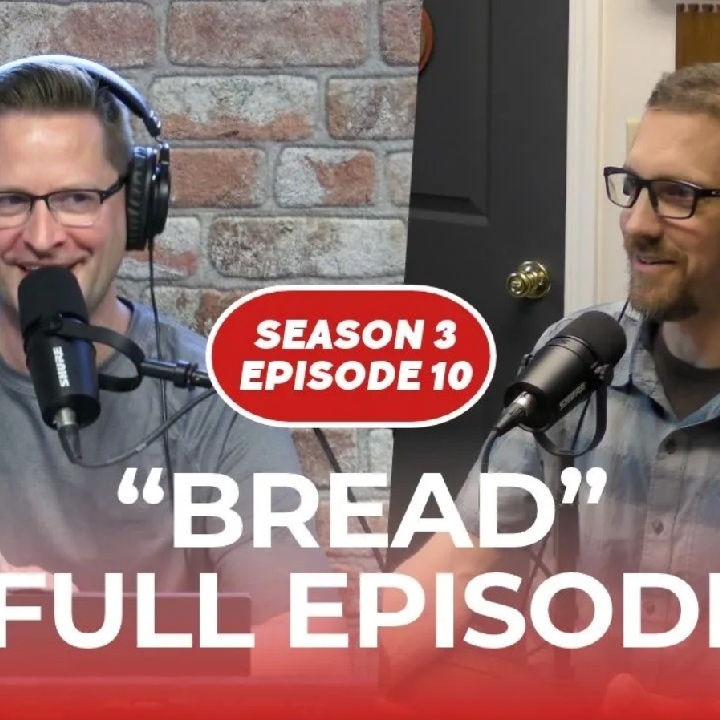
Our topic today is "bread" as it appears in John chapter 6. And Jesus mentions bread several times. One key verse in particular, John 6:35, reads,
"Jesus said to them, 'I am the bread of life; whoever comes to me shall not hunger, and whoever believes in me shall never thirst.'"
And that's out of the ESV. So, he's also kind of doing a callback to John chapter 4 where he was talking about living water and the woman at the well. So, interesting passage there where he's talking about himself being bread. And there's some connection with the Old Testament as well, with the manna. So, very interesting passage here. We'll go ahead and do opening thoughts around the table and then continue the discussion. So, Dr. Jon.
All right. Well, a few verses back, I just think, I know we might have mentioned this a little bit before, but it's, it's just, it gets funnier and funnier the more that I read it. One of the things I thought was kind of, actually kind of funny leading up to it is just Jesus' interaction with the people. And so, just to set this scene up, right, the day before, he fed the 5,000. And so, people that were fed, they wake up the next day, right? Stretching, getting going for the day. And then they're like, well, where's Jesus? Jesus isn't here anymore. And so, they find out that he, he's on the other side of like, he's on the other side of the sea. And so, starting in John 6:25, it says,
"When they found him on the other side of the sea, they said to him, 'Rabbi, when did you come here?' Jesus answered them, 'Truly, truly, I say to you, you are seeking me, not because you saw signs, but because you ate your fill of the loaves. Do not work for the food that perishes, but for the food that endures to eternal life, which the Son of Man will give to you. For on him God the Father has set his seal.' Then they said to him, 'What must we do, to be doing the works of God?' Jesus answered them, 'This is the work of God, that you believe in him whom he has sent.' So they said to him, 'Then what sign do you do, that we may see and believe you? What work do you perform? Our fathers ate the manna in the wilderness; as it is written, "He gave them bread from heaven to eat."'"
So, what I thought was really funny. You're not coming here to seek signs, right? So, it's like, so then like, okay, well, then we're supposed to be here for signs. Okay, so what signs do you do then that we may see and believe you? What work do you perform? Our fathers ate manna. So, like, maybe there's some more food involved here. Maybe, I don't know, maybe this is something you can perform, just to give us more food, more bread. And then it's just kind of interesting that, like, they never, they were so focused on their physical. And Jesus will then go in to say, like, actually what the bread actually is. But I just thought it was so funny that they came looking for him. They found him. They're like, what are you doing here, Jesus? That's weird. I didn't think you were going to be here. And then he's like, you didn't come here to see signs. They're like, well, okay, we can say we came here to see signs. What signs do you perform? You know, there was a story that, like, God gave some food. So how about you do that one? Then we'll believe you. It's just interesting how there's this pull between the physical and the spiritual. And I think that was just a battle that Jesus was always not trying to, like, win because he doesn't need to, like, fight, but it's always something that he was trying to teach people, was like, there's a difference between the physical and the spiritual. And that I think a lot of us have a tough time moving from physical to spiritual—myself included, sometimes.
Yeah.
All right, good. Josh, opening thoughts?
Yeah, I think—opening thoughts, plural? It's fair?
Multiple.
So just to piggyback off what Jon said. Yeah. Only two. It's interesting that the people were seeking Jesus for just regular, you could say selfish or maybe practical reasons, like, hey, this guy hands out lots of food. And I hadn't thought of it that way. Like, hey, maybe you do, like, a sign with more bread, because this is the crowd that he had just fed miraculously. Right? They're like, maybe he'll do that one again. That is funny. And then I'm just struck in this passage and beyond how Jesus tends to teach in metaphor or at times uses these metaphors that are easily misunderstood. Though he's teaching something that is profound and deep, it's as we'll see, like, even close disciples at times were like, what? Like, they didn't get it. And I think I would have been one of those people that's like, what?
Right.
And so, I think my first thought, one of the thoughts is that Jesus is willing to challenge us in ways where we have to wait longer to see what he really is planning or what—we see that with the disciples anyway. Like, they're hearing a difficult teaching, and they had to wait longer to figure out what that really meant. But did they trust him enough that he was still who he said he was? So, the challenges of using metaphors when people tend to take things literally. It's interesting.
Yeah.
Robyn?
I guess my opening thought was along the same lines as you guys. I was kind of stuck on that part where Jesus says to them,
"'you are seeking me, not because you saw signs, but because you ate your fill of the loaves.'"
And I was like, well, what's the problem with that? I guess. Like, in my own understanding, like, these days, like, in my mind, I think, I mean, Jesus does meet all of our physical needs, or like, he meets our need, like, in practical ways as well as spiritual ways. So, my thought was, why is, why does it sound like there's an issue that he has with them, like, following him for that reason? And I tried to put myself in the context of what it would be like to be living in this time and what bread meant to them. And it does sound like what you guys are saying is more that it was like, because in my head, why would it be better to seek for the sake of signs? I think that right now, people are constantly looking for things like signs, wonders, the extravagant and experience. And I think that that may be just as bad as seeking Jesus for the sake of like our, like, practical needs. And so, I thought that was interesting that he seemed to have an issue with that. But I think also, like, it probably was in that time, like, we just have bread, we go to the store, we have food all the time. Like, it's so easily accessible. And then they had to, took all this time to have food provided for them and whatnot. And so, I think it is interesting that their, I guess, like, that he took some umbrage with that, that they were seeking him on behalf of the bread when like, he's like, no, the whole point is that I'm trying to point to something more eternal. Like, that is really what it is, is that it isn't that there's a problem that they are having practical needs met so much as like, they seem to be missing the point that it is, he's trying to point them to the eternal bread that truly satisfies. So, yeah, my opening thought was that I was confused. So, so I had to do a little, some searching there.
Well, and maybe the signs was important because we know that according to Scripture, signs points to Jesus, right? Don't. I mean, signs aren't just for the ooh, ah factor of it. And so, maybe it was like, well, if at least you were looking at the signs, you would be curious as to why this awesome thing is happening. A little bit farther along, it's almost like atheist versus agnostic. It's like, well, at least you're acknowledging there's something out there versus just what we can like, physically see and touch. So, maybe that was part of it, maybe.
Yeah, yeah. Like, they, like, he's like, well, I did this miracle for you guys, but you kind of stopped at the miracle and it's supposed to point to something more eternal.
Well, and he was saying, like, you, all you guys want is bread.
Right.
Like, you don't even care about the sign.
Right.
All you want to do is fill your stomachs. And so, it's not even the curiosity about like, well, how did this happen?
Like, they would have just been satisfied with that.
Right. Yeah. Just being filled.
Yeah.
Yeah.
Yeah. I thought it was interesting how in verse 32 of John 6,
"Jesus then said to them, 'Truly, truly, I say to you, it was not Moses who gave you the bread from heaven, but my Father gives you the true bread from heaven.'"
It's like they didn't even know God was in the old example.
Right.
They thought it actually came from Moses.
That is strange.
That is interesting.
And so, like, they didn't even have, it seems, an understanding that God was in the equation, was a factor in it. And so, he's actually saying, introducing, my Father is the one who gives the bread.
Right.
So, which is quite a contrast because as this plays out, a lot of people end up leaving, as the chapter goes on. A lot of people stop following. Some disciples stop following. And then contrasting that with the woman at the well, there was like, no miracle. Like, there was no, like, water that came out, abundant physical water or even bread, you know. He did tell her everything that she had ever done, I think is how she described it. That's kind of like a miracle, but in that sense it's a wonder.
Right.
The result of the woman at the well, many in the town believed. The result of after the fact of multiplying the bread, a lot of people walk away.
Right.
And so, what are some thoughts of how there's two different outcomes there? Like without the miracle, without a physical miracle—the result at the woman at the well—a lot of people believe.
Right.
And then after doing the bread, and he's gotta like.
Saved? Eh, let's get out of here.
Like, a lot of people stop following him. So, isn't that interesting how even without a sign, the Samaritans came to more faith than with a sign.
And I thought it was interesting about that is I wonder if there's something to personal testimony, because at the woman at the well, it says in 39,
"Many Samaritans from that town believed in him because of the woman's testimony, 'He told me all that I ever did.'”
And so, I just, I wonder if that just speaks to the importance of like, well, when someone has had a personal experience with Jesus and they share that, that might be such a powerful component to people believing. But it is interesting that even with a crazy miracle like feeding, like, you know, over 5,000 people, that that still wasn't like, enough. Another thought that I had is, I said,
"A deeper level of faith. Perhaps it's one thing to believe Jesus is the Messiah and something different to follow his teachings."
I think it's easy to say that Jesus is my Savior. It's another thing to say that he's my Lord. Because Savior is like, hey, great, I'm saved. But Lord means following after. And which I think is kind of interesting, just really quick. In Hebrew, I just wrote down, in Hebrew, "Lord" is "Adonai." The Hebrew word translated is lord or master. And then even in, like, Greek, all they did is just, like, translate Adonai into Yahweh. And it's just another translation of the Hebrew word which is master. So master, meaning owner or rule. And so, that's, that is what we're saying when we're saying, Lord, that Jesus is my Lord is he's, I mean, it sounds weird in today's terms, but he's my master. He, I will do what he tells me to do. It's a lot more difficult to say that than it is to say that he's my Savior. And I think that could be one of the differences, too.
I think—and maybe for this specific instance, like—if they really came looking, if they came because he had offered them their fill of bread, they may have been looking for more of that, and that's not what he did this time. And so, like, I guess in that same vein of, we could be looking for something very specific from our Savior or Jesus. And if he does not kind of operate the same way we're expecting him to, like, the decision is made, like, well, this doesn't fulfill what I wanted it to fulfill. So, I'm gonna move on to something else. Like, I thought I'd be getting more of this. I thought this is what I was gonna get if I followed this guy. And then it turns out that I'm wrong. And not only that, then he starts to say some really weird stuff about eating his flesh. And they don't know what that is. Like, they don't have, you know, the Spirit of God that they're interpreting that through and whatnot. He's like that again. Like, it's the rubber hits the road kind of thing. So.
I would say that's definitely some aspect of it because it says, you know, like in verse 60. Well, before verse 60, Jesus says things, you know, like,
"'unless you eat the flesh of the Son of Man and drink his blood, you have no life in you.'"
And that sounds like, just at face value, sounds like cannibalism.
Right.
And like Levitical law, you can't eat the blood. You know, things like that. So.
Right.
I don't fully understand why Jesus used such a dramatic metaphor. Because even when I read it just devotionally or something, I go, oh, Lord, that's kind of wild, you know? So, that's why I think, realistically, then when it says in verse 60 that,
"many of his disciples heard it," and "they said, 'This is a hard saying; who can listen to it?'"
And then some of them, like, stop following him. I don't know if I really would have been in that group. It's more fun to just think, nah, I'd just be committed to Jesus. But because I tend to think literally and I think if I knew Jewish law and things like, no, no blood and you're human, like that's, it sounds dramatic is how I'll say it. Because even reading it today, I sometimes think like, whoa, that's, why so far with the metaphor? But we have the benefit of then seeing the Last Supper and Jesus explaining his giving of his body and his blood. And we can look back at it and go, well, it was never that anybody actually ate of his flesh or blood. It was metaphorical. But it's a tough teaching, I would say. Like, if I was just going to sit down with somebody, say, hey, let's read some Bible together, I think that would still shock people today. And so, then you have to go further into Jesus' teaching. And we do see, like in John even, several instances where—let's see if I have them written here—but you've got the woman at the well thinking like, oh, you've got this living water, yeah, give me this water, where she takes him literally. Nicodemus, can a man be, go back into his mother's womb? Metaphor turned literal. And those things happen pretty consistently even in the book of John. So, it's helpful to, in that bigger context, go, okay, this is part of how Jesus teaches. He gets your attention with a metaphor so that you have to think more deeply about it.
Yeah, I like looking back at the account of the manna in the wilderness, because that's, that is the story that these people brought up. They brought it up.
"'Our fathers ate the manna in the wilderness.'"
They ate that for like 40 years, right?
Right.
And just to like side-by-side, compare that account with what happened with the Israelites in the wilderness with Jesus saying that he is the bread. He's kind of doing a side-by-side comparison. Right? And even though the people had that manna in the wilderness—the very story these people now are invoking as, you know, like, ideal—when it actually happened, they weren't really content with what was going on. And in Numbers chapter 21, starting in verse 4, it says,
"From Mount Hor they set out by the way to the Red Sea, to go around the land of Edom. And the people became impatient on the way. And the people spoke against God and against Moses, 'Why have you brought us up out of Egypt to die in the wilderness? For there is no food and no water, and we loathe this worthless food.'”
That was the ESV. King James actually says in verse 4, a little bit different, but it kind of jumps out at me a little bit because it reads,
"And they journeyed from mount Hor by the way of the Red sea, to compass the land of Edom: and the soul of the people was much discouraged because of the way."
Now, this might be a little play on words here, but "the way" is what we would, in English, what they called in Acts, the early church. And Jesus said,
"'I am the way....'"
The people was discouraged because of the way. Because, and just kind of substituting Jesus in there, they actually were being given manna and they were discouraged because of the way. Now, I know they're referring to the actual route they were taking.
Yeah.
Sure.
But you know, what if there is kind of a parallel there to actually being discouraged in the midst of receiving from God. Right?
Right.
And I bring that up because 1 Corinthians 10:9 says,
"We must not put Christ to the test, as some of them did and were destroyed by serpents...."
New Testament has a warning about that very account.
Right, yeah.
Which makes it applicable to us today. Right?
Right.
Because in Numbers 21:6, the Lord,
"Then the Lord sent fiery serpents among the people, and they bit the people, so that many people of Israel died."
And we've talked about that in the episode, we, the "Lifted" episode, we went more into detail about that. So, I thought that was a kind of a remarkable contrast there between what happened—well, not contrast, but comparison—between what happened in the Old Testament and then what Jesus is saying there, how there actually can be, depending on which translation you use, impatience or discouraged in the midst of being in the way that God has provided. And there's a warning against turning away from that.
Right.
And so, any thoughts on how that's really very applicable, I think, today? Because people could get even discouraged having Jesus as the bread. Right? The ancient Israelites were remembering the "good old days" where they had—
Egypt?
Back in Egypt. Maybe us today, we could be tempted to remember the good old days when we, you know, looking back on other bread, sources of bread, so to speak.
Right.
That seems to be a warning there in Corinthians, 1 Corinthians about that, so. Any thoughts on that?
Oh, I just agree. It is interesting how, I mean, there are many people in, that would look at Jesus' teachings and that would be a repellent. I mean, the way is the thing that people end up like being discouraged by. And sometimes, I mean, even, like, you know, you mentioned Josh is like, well, this is a tough teaching. Like, it's hard to even hear. Now, that was referring to, yeah, the intense metaphor. But how many times, I suppose, have, you know, including myself, have I thought, like, wow, this is a tough teaching. Like, this isn't easily digestible. And that's, I guess, where the rubber meets the road. It's like the crossroads where it's like, well, either I'm going to move forward and say, well, even though this is a tough teaching, I do believe that Jesus is Lord. So, it's not, it doesn't need to change. I need to change. Or it's like, you know what? I'm gonna go find something else. And the "good old days" would be like, well, at least over here I was laughing and, you know, having a good time and, you know, tipsy, you know, half the week. That was kind of fun. And it's trading something very significant for something very minor. And I think that that's a very easy thing to do.
We have that example later in the chapter where, you know, verse 66,
"After this many of his disciples turned back and no longer walked with him."
I think it's interesting that it uses the phrase "disciples," which would be like, his students, his followers, just like it uses disciples for the 12 disciples. But these ones stop following. We don't know what they chose later on, but. And Jesus says, so he,
"said to the twelve, 'Do you want to go away as well?'” And "Simon Peter answered him,"
this is in verse 68,
“'Lord, to whom shall we go? You have the words of eternal life, and we have believed, and have come to know, that you are the Holy One of God.'”
And so, Peter, even if, I don't know if Peter was like, oh, I get it, this is a metaphor. Like, this is deep. Because they weren't looking back through the cross and the resurrection already.
Right.
But he's saying, like, where would we go? Like, even if this is tough teaching, where would we go? You have the words of eternal life, and we have believed. It's already something that committed to. So, it's interesting that while at times Jesus is having compassion on a crowd of 5,000 men plus women and children, he's also—and you could be like, see, he's drawing in the crowds—then when they came back and asked for more, he kind of called them out on their actual motives. Wasn't afraid to just challenge them with truth. And then to teach this really intense metaphor that got some people to go away. There's times where he was being just wide open to the crowd and times where he would teach to a level that kind of thinned the herd in a sense, whether that's the intention or not. It kind of functioned that way. Which is interesting to me.
Yeah.
Yeah.
It's truth. And so, truth will divide.
And I think taking that approach as like present day believers as Peter did, I think that was, it's great. It's like, well, give me something better at the moment, give me a better alternative. Even if the teaching is tough, if it's hard to listen to, what better option is there if you're really looking for truth? I mean, I would put myself in that same category. It's like, you know what? If you can give me something better than Christianity, better than Jesus, I'll follow that. One hundred percent I will. Not going to. I don't think that's going to be out there. But present that to me and I'll be ears wide open. But yeah. So, yeah, where else will I, where will I go? There's nothing better I've come across yet.
That's so interesting. I didn't think of it that way of like, if you could provide something better, I would. And I think that there's probably a lot of thinkers out there that are similar to that. When I've read this Scripture, the way I, so like, when I grew up, I came to know Jesus at 15. Right? None of my family knew God. And I had a friend, I remember one time specifically asked me after years of this, she's like, Robyn, like, how do you do this when none of your family loves God? Because she lived in a Christian home and it was even hard then. Like all the, you know, butting heads and, they were different. And I was like, I remember it didn't occur to me until she asked me this question that I was like, well, like, what other choice do I have? Kind of like, this is the way. Like I met Jesus. And so, for me it was more like a reflection back on like God has already proven himself, that he's the way. And so like, even when I don't understand what's going on, I'm going to choose to move forward. And I think that's so interesting that your reflection is like, well, if you, if there were a better way, I would take it. But there is nothing better. You know, that's kind of like your, that's interesting.
It's like forward versus backwards.
Yeah, like my experience is showing me this. And so, I'm going to choose to move forward in that because even, that's super interesting. And then when Jesus talks like this, like, you were saying, it kind of thins the herd sometimes. We don't know if that's for sure the intention of it. But I, in my mind, I'm like, Jesus could have chosen a lot of different ways to say what he needs to say. And he definitely, I'm sure he could work a crowd if he wanted to. Like, but I think that it doesn't make him nervous knowing that people are going to walk away from, like, I think he wants not only for him to know where people are landing, but so people know, like, what they're kind of like, this is what you're getting into. You're not always going to understand what I'm saying. You're not always going to understand where we're going with this and do I have your trust anyway kind of thing. So.
I wonder if in Jesus' mind he's like, well, if you can't even withstand some difficult teachings, how are you going to withstand, like, actual, like, physical pressure? Like when people come against you? It's almost like a, I wonder if it's almost like a minor, like a minor preparing. Like, it's like this is tough. Yeah, it's maybe even weird to hear. But you think this is the worst it's going to get? I mean, you got to be kidding me. And so, it's like, well, yeah, if this is too much, okay. I mean, I wish that wasn't the case. But, yeah, there's, there, there's a lot more resistance to being a Christian than just like, wow, that was, that was kind of weird here, hearing that. Yeah. So, maybe it's just a little bit of a, well, yeah, this is what you're in for.
Yeah.
A little taste.
I think an interesting connection here. They're talking about manna and one of the passages in Deuteronomy, chapter 8, famous verse about man does not live on bread alone, but on every word, or more literally, all that comes from the mouth of God. And the verses right before that, let's see, you know, in verse 2, it's saying that, you know, God gave them the manna in the wilderness to humble them and test them to know what was in their heart, to see if they keep his commandments or not. Verse 3,
"he humbled you and let you hunger and fed you with manna,"
goes on to, sorry,
"fed you with manna, which you did not know, nor did your fathers know, that he might make you know that man does not live by bread alone, but man lives by every word that comes from the mouth of the Lord."
And I guess literally it's all that comes from the mouth of the Lord. And so, God was teaching the people of Israel that they had to depend on him and his Word. Everything he said, that's truly what they depended on. That's where they got this bread from. And so, then we're looking in the Gospel of John. And when John introduces the book, the Gospel, you know, what does he call Jesus? The Word.
"In the beginning was the Word, and the Word was with God, and the Word was God."
And it goes on. Verse 14,
"the Word became flesh and dwelt among us, and we have seen his glory."
And so, this idea that John is calling Jesus the Word, and then we get to chapter 6, and the Word is teaching the people. And he's saying, I'm the real bread. The very Word of God is the bread of life. And I think it ties right into Deuteronomy 8, where God was saying, here's manna. But the real thing, you don't live on actual bread, you live on every word or all that comes from his mouth. And then you have John saying, Jesus is the Word, and he's teaching them: you have to eat of me, I'm the bread of life. So, this spiritual sustenance comes from him. So, I think that's a cool connection.
Yeah. Especially how that actually ties in with the temptation of Christ because the devil wanted him to turn the stones into what? Bread. Right?
Right.
And then he actually said that verse, man does not live on bread alone, but on every word that proceeds from the mouth of God. Right? So, he was actually tempted on this very issue of bread.
Right.
Interesting.
That's pretty wild. Yeah. Wow.
I mean, of all the temptations there's, came down to like, three. Right? This was like one of the three.
One of the three, yeah.
So, right?
Yeah. Interesting. Yeah. Putting faith in something finite instead of the Word of God, basically, kind of what it comes down to.
And bread is like life.
Right.
I mean, it's, it can be equated to life. Like, people can think that that's what they need to live is the bread. That's basically what the Israelites were eating—
Right. Yeah.
—in the wilderness. And to think that God, like you said there, Josh, he took away the other sources of food in order that they would have the manna, and solely the manna, basically, as the providing thing. I just wonder, what, if there's any parallels today where God might take away sources of what we would think is life and it feels like we're starving, but he doesn't leave us without provision.
Yeah.
It's just that we would need to be mindful of what life really is and not get angry as the Israelites seemed to get angry.
Right.
Like this isn't good enough.
Yeah. And I want to answer that potentially. But before I do that is, going back to basically kind of the setup of test is basically, you mentioned Josh in Deuteronomy, that the word test was spoken because that was part of the reason why, you know, in the wilderness and manna. In Exodus 16:4 it says, and this is just a parallel from the Exodus account to the account in John right before what we're talking about here, right at the feeding of the 5,000.
So, Exodus 16:4 says,
"Then the Lord said to Moses, 'Behold, I am about to rain bread from heaven for you, and the people shall go out and gather a day's portion every day, that I may test them, whether they will walk in my law or not.'"
And then in John 6:5,
"Lifting up his eyes, then, and seeing that a large crowd was coming toward him, Jesus said to Philip, 'Where are we to buy bread, so that these people may eat?' He said this to test him, for he himself knew what he would do."
And Jamieson-Fausset-Brown, he has a commentary that says,
"The grand object of their being led into the wilderness," going back to the Exodus account, "was that they might receive a religious training directly under the eye of God; and the first lesson taught them was a constant dependence on God for their daily nourishment."
And so, the test, going back then to your question is, yeah, perhaps how are we tested? What are some things that perhaps God puts in our lives that are, that's testing us basically to move us towards a dependence on him or a dependence on our own understanding. "Lean not on your own understanding," the Bible says also. So, I mean, I think that to more specifically answer your question, there are some things that can be put in our lives that can be a difficulty is essentially like, well, basically anything, I would think, that was from the quote, unquote, "old" life that you learn to come accustomed to, and the things that made life feel good, and you think that you, you know, I got all my ducks in a row. Well, if that's not, if God isn't the highest point, then systematically those things ought to be taken off and then put below where God ought to be. And maybe it's not always removing completely, it's just readjusting like what's actually the most important. And that can be uncomfortable too.
Yeah. Well, one of the major oppositions that some of the audience had to Jesus' teaching there was that he said that he is the bread that came down from heaven and that would mean that he is God. Right? And I like how he later on in chapter 6, he's like, well, what if you were to see me ascend into heaven? Would that solve that issue for you? If you've got a problem with me saying I came down from heaven, what if you saw me go up into heaven? It's like he's giving a foreshadow of what some of the disciples actually will see. They actually will see him ascend into heaven. I think it's a fascinating hint as to eventually, like maybe that would, maybe that would be like one of the last things some people needed to see in order for them to believe. And he like saved it for the very end of his ministry there. He goes into heaven and then it just all clicks. Like the bread from heaven teaching. And then, because the disciples really, they, if that was the last thing they needed to know, that life is in him, in believing in him, that sort of fearlessness that came about the early church, you know, as they finally became known as the Way that might have been what actually helped it all to click, that their very life is in believing the one who came from heaven as the bread from heaven. Right? Any thoughts on that? How the ascension later on would connect with this very teaching about him saying that he is the bread that came from heaven. And just for reference, that ascension is recorded Mark 16:19, Luke 24:51, Acts 1:9 talks about that as well.
Yeah, well, I just think that it's kind of cool that the ascension itself, it kind of covers both ends of the spectrum, the very logical-minded people and the ones that are more like miracle, like, wow, this is something amazing to see. It satisfies both of those groups and in-between, obviously. Because if it satisfies the extremes, then it satisfies the middle.
Right.
And so, for the logical, right? Well, okay, if manna, if God came down, or in this case, well, if Jesus is going up, well then yeah, then manna, then he must have come down. Right? So, then like, well, that's logical. Okay, I'll buy into that. People that see a man flying is like, what? It's like, that's awesome. He's probably God. Right? So, both ends of the spectrum are satisfied. So, then the middle ought to be satisfied as well. And so, everybody gets—God is so cool that he basically covers all of that. All ends, both ends of the spectrum.
Yeah. Like, he knows what people need to see. And, like, the way that he could, just how that speaks to each one of us probably is a different story of how we became convinced of God's, like, the validity of God, you know, and he could speak to each and every one of us in a way that we can interpret and we can understand.
Right.
It's pretty crazy.
So, Psalm 78 kind of recaps this as well. It talks about the Israelites. And in verse 23, starting in verse 23, it says,
"Yet he commanded the skies above
and opened the doors of heaven,
and he rained down on them manna to eat
and gave them the grain of heaven.
Man ate of the bread of the angels;
he sent them food in abundance."
And the Psalm goes on to, in verse 70, it says,
"He chose David his servant
and took him from the sheepfolds;"
and continues,
"from following the nursing ewes he brought him
to shepherd Jacob his people,
Israel his inheritance.
With upright heart he shepherded them
and guided them with his skillful hand."
I think it's interesting how we've got this talk of manna in the Psalm. And later it talks about David and Jesus as the good shepherd and from the line of David. It kind of ties in there, in one Psalm, these aspects of manna from heaven and then it's kind of like a foreshadowing of Jesus as well, so. And, you know, a lot of times when Jesus, when a part of the Psalm is mentioned, like Jesus on the cross, "My God, my God, why have you forsaken me?" the entire, it's like an introduction to the whole Psalm and there's more to read into that. So, I thought that was kind of notable, too.
Yeah. And going back to, in Psalm 78, back to verse 21, there's, I thought, an interesting comparison with a couple other passages in the New Testament. But in 21, Psalm 78:21-23, it says,
"Therefore, when the Lord heard, he was full of wrath;
a fire was kindled against Jacob;
his anger rose against Israel,
because they did not believe in God
and did not trust his saving power.
Yet he commanded the skies above
and opened the doors of heaven,
and he rained down on them manna to eat
and gave them the grain of heaven.
Man ate of the bread of the angels;
he sent them food in abundance."
And then I compared that with Romans 5:6-8, which says,
"For while we were still weak, at the right time Christ died for the ungodly. For one will scarcely die for a righteous person—though perhaps for a good person one would dare even to die—but God shows his love for us in that while we were still sinners, Christ died for us."
And I just kind of saw a little comparison there. It's like, even though there's all this sin, and yet I will give you manna, and yet I will give you Christ. And I think that also echoes John 3:16,
“'For God so loved the world, that he gave his only Son, that whoever believes in him should not perish but have eternal life. For God did not send his Son into the world to condemn the world, but in order that the world might be saved through him.'"
So even though we deserve death, even though we deserve punishment, he sends manna, he sends Jesus. And that's amazing.
That's good.
Yeah.
That's a really good connection there.
Yeah.
That's awesome.
Well, yeah, believing is eating, right? Eating of the bread. And John 6:27, he says, Jesus says,
"'Do not work for the food that perishes, but for the food that endures to eternal life, which the Son of Man will give to you.'"
And so, then they go on to say, what must we do? He says the work is that you believe. So, believing is a work, it's a labor, it's a, it's an effort. And it produces the eternal life that he's leading us into.
I thought it was interesting that he said that right after the,
"'you are seeking me, not because you saw signs, but because you ate your fill of the loaves.'"
And it, at first I read them as two separate thoughts. Like you saw,
"'not because you saw signs, but because you ate your fill of the loaves.'"
And then he says,
"'Do not work for the food that perishes, but for the food that endures to eternal life.'"
And what I started thinking of then was John 15 and, like, bearing fruit that remains in something that's eternal. And how often I think that we're sometimes working at things. We, like we in our, like, modern Western culture, we love to be productive. And sometimes being productive doesn't necessarily mean that we are bearing any fruit. So, we can get, we can really busy ourselves with just, just for the sake of being busy and being productive, but it's not necessarily fruitful or any fruit that lasts. And so, I was tracking with two different thoughts at first there. But then the way I read it again is that he's kind of telling them, like you're putting all this work into seeking me, but for the temporary of the bread when you should be putting this work into seeking me for the eternal bread kind of thing, like, if that makes sense. Like, you're putting all this work into it, but your outcome is only temporary when you could be putting this work into seeking me and for the sake of the eternal, like a life that I want to offer you kind of thing, so.
Yeah, he's actually contrasting it with belief, and—which is what they didn't seem to have. It was like totally absent. That's why he brought it up, I think. It's like, do not work for the bread, but work for eternal bread, which is believing.
Right.
Which means that they hadn't really even done that yet.
Right.
So, then I'll kick back to Genesis really quick, at the fall. So, when God is handing out like, punishment, when he gets to Adam, he says towards the end, verse 19 in Genesis 3 says,
"'By the sweat of your face
you shall eat bread,
till you return to the ground,
for out of it you were taken;
for you are dust,
and to dust you shall return.'”
So, it's almost like from the very beginning we've had this desire, we've had this, like, this, it's the fight between physical and spiritual. And part of, it seems like part of the punishment, part of the consequence of the fall is that you have to rely on bread. It's, you, the sweat of your face, you shall,
"'By the sweat of your face
you shall eat bread....'"
And all that, like, and before that he talked about how difficult, like, how difficult it's going to be for you to work and till the ground because it's not going to be easy anymore. And so, it's almost like from the very beginning there is this, like, separation or this, like, difficulty of us understanding, like, the difference between the sustenance, the bread that we have to eat because we have to eat bread as a result of the fall. And yet Jesus is like, well, now I'm the bread, so I'm taking that over.
Interesting.
Like, no longer are you going to have to eat bread to stay alive. You take of me and I mean, it's crazy all the different parallels that Jesus took on specifically from the fall. Right? There's like the crown of thorns. There's like the cross. There's all these parallels that if you look into it. But that's another one. The bread is another parallel.
Yeah. So, if you were to insert believing in Jesus into that work narrative. It does show that there is some effort involved. It, like, it's not totally coasting.
Right.
Right.
Because there are some headwinds being in the world. Right? There's some headwinds that are faced that would try to oppose belief. I mean, there's clearly all these people that left because of, for whatever reason. So, there is work involved in holding fast, however you want to say it. There's plenty of other verses that would encourage people to be steadfast in their faith, run as in a way to win the race, that kind of thing, so.
It's like he's simplifying it. Like your only job is to believe.
Right. Yeah.
But I mean, even that is quite a task in the world that you're living in.
Right. Yeah.
Interesting. That's it, I just had never thought of that before. That's, like, that. Yeah. As a result of the fall, we would struggle to have bread or the sustenance that we need. Like now we're dependent to some degree on that. And like, here comes Jesus and he solves that issue, in a sense.
Because death is a part of the fall.
Right.
Right? So, all of a sudden, we're going to die, and we're going to die quicker if we don't eat bread.
Right.
And so, all of a sudden this becomes part of our life is to eat bread. And that was never supposed to be the case.
Right.
Right? And Jesus is like, this was never supposed to be the case that you eat bread to stay alive. And it goes all the way back to Genesis.
Hmm.
It's crazy.
So, it's like when you wake up in the morning.
Hungry.
Your nine to five. I'm gonna go to work believing. I mean, you gotta. You gotta make it as much of a part of your daily routine to be intentional about believing in Jesus as if you were going to work, right?
Right.
He, Jesus, invoked the word work or labor into the discussion, right?
Yep. Yeah.
And so, alarm clock goes off. Time to start believing.
Alarm clock goes off, thank you, Jesus.
Yep.
There you go.
Another passage that I came across that I thought was interesting to connect to this. Later in John, you know, Jesus says he's the good shepherd. And in the Old Testament, we see God as the Shepherd. In Ezekiel 34, God's speaking judgment on the leaders of Israel, the shepherds of Israel that have been mishandling their role. And God says, you know, he will be his people's shepherd. He says, I'll search out
"'for my sheep and will seek them out. As a shepherd seeks out his flock when he is among his sheep that have been scattered, so will I seek out my sheep, and I will rescue them from all places where they have been scattered....'"
Shortly after that, he, God says he will—so, he just said he'll be the shepherd. But then he says,
"'And I will set up over them one shepherd, my servant David.'"
And this is long after David. This is, so, it has to be a representative here. So,
"'I will set up over them one shepherd, my servant David, and he shall feed them: he shall feed them and be their shepherd. And I, the Lord, will be their God, and my servant David shall be prince among them. I am the Lord; I have spoken.'"
So, in this passage, you have God saying, I will shepherd the people, which means he's going to tend for his sheep. But he also then says, "'I will set up...one shepherd, my servant David.'" So, Jesus, being the son of David, it says, "'he shall feed them:'" says it twice, "'he shall feed them and be their shepherd.'" And so, this picture of a good shepherd who comes and feeds the sheep fits also with this idea of Jesus saying he is, not just that he's providing something for them to eat, but that he is the source of sustenance as the shepherd and as the prince, which points to that, like son of the king. So, I just think it's an interesting connection there that this prophecy towards a quote unquote "David" that would come be their shepherd and feed them and be the prince among the people.
I like that. That's really good.
Yeah. Well, closing thoughts as we wrap up this topic of bread?
Yeah, so I think I'm just going to go back to the idea of something eternal, Jesus, and something that is non-eternal, something that is easily, like perishing away. Jesus versus bread. And one more trip back to Genesis, really quick. Genesis 25:29-34. So, this is the account of Jacob and Esau starting in verse 29,
"Once when Jacob was cooking stew, Esau came in from the field, and he was exhausted. And Esau said to Jacob, 'Let me eat some of that red stew, for I am exhausted!' (Therefore his name was called Edom.) Jacob said, 'Sell me your birthright now.' Esau said, 'I am about to die; of what use is a birthright to me?' Jacob said, 'Swear to me now.' So he swore to him and sold his birthright to Jacob. Then Jacob gave Esau bread and lentil stew, and he ate and drank and rose and went his way. Thus Esau despised his birthright."
Then Galatians 4:7 says,
"So you are no longer a slave, but a son, and if a son, then an heir through God."
Titus 3:7,
"so that being justified by his grace we might become heirs according to the hope of eternal life."
Then Ephesians 1:13-14, it reads,
"In him you also, when you heard the word of truth, the gospel of your salvation, and believed in him, were sealed with the promised Holy Spirit, who is the guarantee of our inheritance until we acquire possession of it, to the praise of his glory."
So, all of that to say, don't give up your birthright for simple bread. And simple bread meaning the things of this world, the things that are not eternal. It could be a job, it could be money, it could be things that we think are important. And our birthright is the salvation through Jesus. And so, just like Jacob and Esau, it's amazing how he gave up his birthright for bread. And we are very capable of doing the same thing.
All right. Closing thoughts, Josh?
Yeah, when I think about Jesus saying, you know, he's the bread of life. And we know that bread is like a staple part of the diet that people would rely on for sustenance and that we see in the Old Testament, you know, the people are in the wilderness and they've relied on this provided manna, this bread, like food from God. I get thinking, like, so am I depending on Jesus, like I should be? Or do I just go, yeah, that sounds good. I know that. It's good theology or something. And so, I just kind of guess I would end with thoughts or questions for myself and others, but how often am I looking to other things as that quote, unquote, "bread," distractions, other things, whatever it might be, when really, I just need to abide in Christ. You know, in John 15, Jesus talks about abiding, just remaining in him. And that's a bit mystical. And yet it means we're obeying him, we're loving him, we're trying to walk with him. And I think one of the biggest things that bears fruit in our life is the degree to which we're trying to consistently abide in Christ, to partake of his life and not just doing our own and kind of checking in with the Lord here and there or saying a prayer at the beginning of the day and the end of the day, like, cool, cover my bases. But where we're fostering throughout the day, our awareness of walking with the Lord.
That's good.
Good.
That's good. My closing thought is, I guess, fairly similar to that, too. Just the thought of Jesus is the bread of life. Like, how am I getting Jesus in my life? I guess. Like, I tend to be very, like, I'll read the Word and then think, how can I practically apply this? Like, how do I know that I'm actually in the Word? How do I know that Jesus is actively being the bread of life in my life? And I'm a big fan of, like, I didn't used to be this. I guess I'll say this. I didn't used to be a big fan of spiritual disciplines because I just didn't see the value in it. And I didn't understand, I guess, like, what Jesus was offering through things like reading the Word or the practice of being prayerful. But the thing about food and the thing about bread is, like, we do need it to survive. And I would never, like, choose to go days or months on end without food thinking that I could also be, like, satisfied, thinking that I could be healthy, thinking that I could be nourished. There's something to be said for, like, fasting if the Lord is leading you to do that whatnot. But I just think, like, it's interesting how much we do go through life kind of not realizing how spiritually emaciated we are sometimes. And so, just that idea of this, the simple thing of, like, if Jesus is just really saying, like, your work is to believe, like, what that would look like is putting effort into training our mind to believe the Lord and take him at his word. And so, things like, I guess, like, don't underestimate the value in simply coming before the Lord in prayer or simply coming before the Lord and seeking him out in his Word and seeing how he gives you what you need to sustain you in the life that he's given you, I guess, so. I don't know if that made sense, but kind of, just, I guess, like, I just want to reiterate, like, the value of our spiritual disciplines really is for our sake. It's not that God's going to be mad at us if we don't do these things, not by any stretch of the imagination, or that we—like, punishment. It just is that, like, in the same way I wouldn't, I personally wouldn't deny myself bread. Like, I don't want to deny myself the opportunity to be, like, spiritually, like, robust in the Lord. So. Yeah.
Yeah.
Okay, good. In that account in Numbers, as a closing thought here, where the people in 20, Numbers 21:5, it says, the ESV says,
"'For there is no food and no water, and we loathe this worthless food.'”
Because there is that warning in Corinthians, 1 Corinthians, not to be like this, I guess the warning is like, do not get it in your mind where that you're actually saying, like, I have nothing, and what I do have, you know, it's like, I don't have what I need. I don't have the provision. I don't have the resource, or thinking that Jesus is not enough. You know? And the people, it actually, in the KJ, in the King James Version, it says,
"'for there is no bread, neither is there any water; and our soul loatheth,'"
King James.
King James, "'loatheth this light bread.'"
Light bread.
Call it light bread.
Yeah.
It's like an insult.
Right.
It's like a lightweight.
It's like a Old Testament insult.
It, kind of. Yeah.
What is this? I want some heavy bread.
And it's like saying, even though it's there, it's got no—it's like an insult—like, it doesn't have substance to it. It's, there's nothing about it that will sustain me. Even if I did eat it, I'm going to feel empty.
Yeah.
And there's a caution about viewing Jesus that way: even if I do believe in Jesus, I'm going to feel empty. Like, that's a, there's a warning against that. And somehow there could be a thought that could creep in if, and it depends on, I think, in great part what we allow our minds to dwell on.
Right. Yeah.
Because there are voices, there are messages that would tempt us away from that. Like, the temptation is there to try to think that it won't, that Jesus will not be enough.
Right.
And so, the encouragement there is to continue believing daily that he is enough and not to go the way of saying that it's light bread, that it's insufficient, so.
Yeah. And Jesus showed some great restraint. Because, like, when they're invoking, like, the Old Testament, like God gave us, like, manna, like, Jesus could have just, like, thrown down and be like, well, you know what? Y'all hated that.
Yeah.
And you complained about it and you want some of that? And guess what? A bunch of them ended up dying too because they grumbled so much. Like, you want that?
Yeah.
But Jesus was like, super cool and calm about it. He was just like, and he taught them. But he could have, like, thrown down.
Yeah.
Like you don't even know what you're talking about right now. There's a lot of bad stuff that happened with the manna.
Right.
Well, yeah.
And their response to it.
I mean it's not—
Seriously.
Like, that Numbers 21, it's not an isolated incident.
Right.
Like you could go, you know, throughout the book—
Multiple times.
—and you find many times where they were not happy and a long time to learn the lesson.
Yep.
So, and a lot for us to learn in looking at it.
Right.
So, there's a lot of wealth there for us to study. Well, that wraps up this episode of The Defined Podcast w/ Dr. Jon et al. Thank you, listeners. Thank you, panelists. Great to have another episode in the books. Please like and subscribe if you haven't already.
Please be inclined.
Unprompted. Nice.
Unprompted.
We look forward to another episode soon.
Take care everybody.
Bye.
Thank you for listening to The Defined Podcast w/ Dr. Jon et al. If you enjoyed what you heard, we invite you to like, share, subscribe, and give a five-star rating. Find us online at TheDefinedPodcast.com.