Episode Transcript
Hey, it takes a lot. You pour in a lot of tuition to get the letters behind your name. And then you pay even more to lose a letter.
That's right. That's true.
I've lost the "A" in the "LMHCA."
It's all a racket.
Yeah, associate.
Nicely done.
Congratulations.
Thank you. Thank you.
Fantastic.
Do I dare try a joke to start with?
I mean, you can try.
You can try. So, there's this guy that was afraid of the lunch buffet. He's, like, pacing outside. It's like, there's just so many choices. There's no wait staff. And I'm like, I think I can help. No, that's not how it goes.
It's already a really good joke.
He's like. He asks his therapist what can I do for this? And he said, well, I think I can help you, but you really just need to learn to help yourself.
Oh. Buffet. Buffet joke.
Yeah, buffet joke.
Psychologist joke.
Psychologist joke.
Afraid joke.
Afraid joke. It's like the perfect joke.
It kind of is.
And yet.
If I do say so myself.
And yet, so flawed in the delivery.
I'm afraid it's hard to laugh.
I'm afraid we'll have to pass on that joke.
That's really funny.
What did the person who got a ticket from the police, when they contested it, what happened when they contested their ticket?
They got away scot-free?
They got sent to the de-fined podcast.
That's an original.
I could not have seen where that was going.
Were you reading that?
No, I wasn't reading that.
He was waiting.
I know, I didn't know I was gonna say that.
I didn't know I was going to say, I love that.
That's hilarious.
Oh, my gosh. Oh, I should ask AI to come up with a joke about The Defined Podcast.
That's a good idea. Do it right now.
Okay. Why did Dr. Jon title his show The Defined Podcast? Because after hours of recording with Christopher, Robyn and Mandy, they realized they still hadn't defined what the podcast is actually about. I don't know why that left you out of it, Ro.
That's amazing.
They delivered.
It's been listening to us this whole time, all these years.
I'm annoyed that I'm impressed with that.
That's pretty funny.
That was good.
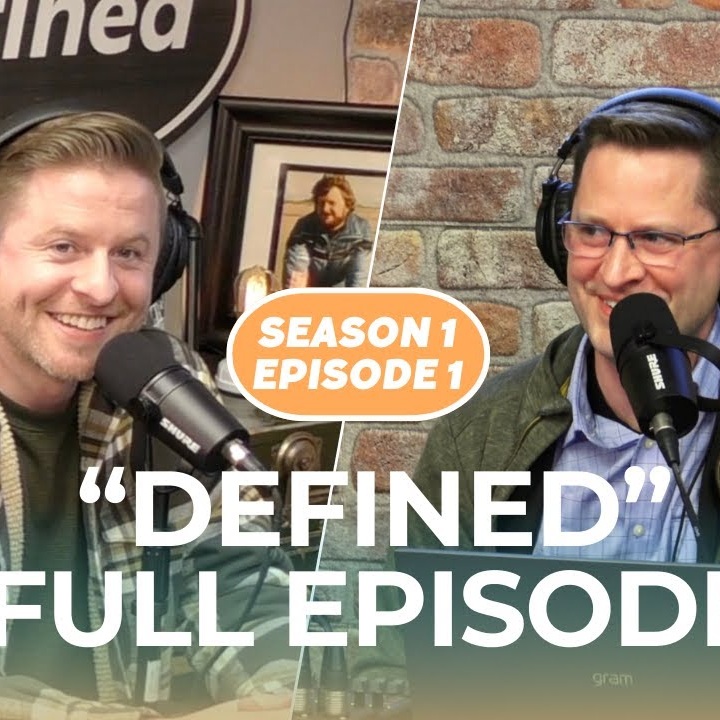
Well, welcome back to The Defined Podcast w/ Dr. Jon et al. My name is Chris. Dr. Jon, psychologist, author, photographer, is in the studio once again.
C'mon now. Hello.
Award winning photographer, actually.
All right.
Nice.
If anybody, he's not going to toot his own horn, so.
Hey, I didn't know that.
There we go.
Yeah.
All right.
We're also joined with special education teacher Robyn Nelson; Rogelio Navarro, licensed mental health counselor; and from REACH Ministry, Mandy Michaels. Welcome, everybody.
Good to be back.
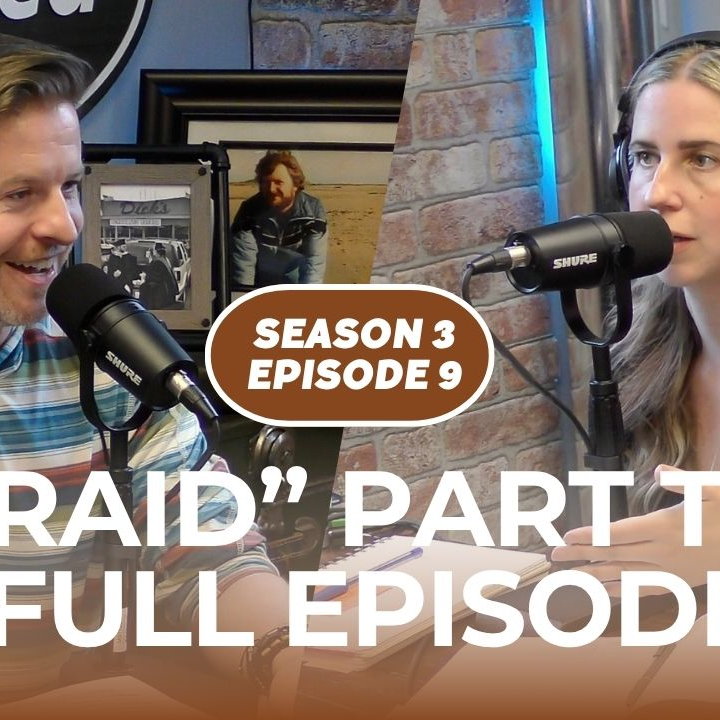
Well, today we're looking at the word "afraid" in the book of John, chapter 6. This is part two of that topic. Our verses are 16-21. I'll read that out of the ESV.
"When evening came, his disciples went down to the sea, got into a boat, and started across the sea to Capernaum. It was now dark, and Jesus had not yet come to them. The sea became rough because a strong wind was blowing. When they had rowed about three or four miles, they saw Jesus walking on the sea and coming near the boat, and they were frightened. But he said to them, 'It is I; do not be afraid.' Then they were glad to take him into the boat, and immediately the boat was at the land to which they were going."
So, our topic is "afraid." Jesus said, "'Do not be afraid.'" And we'll go ahead with opening comments around the table and kick off the discussion. Dr. Jon.
Perfect. Yeah, so going back to the vlog again, the end portion of it where I basically say that, like, fear tends to change its form. It says, yeah,
"Fear is a shapeshifter. When I was a kid, it looked like a leaky treehouse and large spiders. In high school it turned into class presentations and suiting up for my first varsity basketball game. And as an adult, it took the shape of a cancer diagnosis given to my mother and the unexpected death of my father. And if I'm honest, I sometimes catch myself wondering what shape fear might take next. Perhaps you do as well. But we must resist doing so, because this shape shifting characteristic exposes fear for what it really is: a liar.... It has to change its appearance in order to keep the con going."
And I just think that, just going back and thinking about that, it's, it is an interesting thing how fear can, it's bizarre, it's, we have Christ and Christ says, perfect love casts out all fear. And I just think it's fascinating how the enemy will try to always get at us, I think, in some sort of fear. In therapy, it's interesting, because I will usually ask a client or something along those lines of, ask a client if there's fear or anxiety, like what is actually at the base? Like, let's keep pulling the layer off, the layer off, the layer off. And, until we actually get to what we're actually afraid of, and then we can actually deal with it. So, yeah, I don't know. I just. It's just interesting how if we allow ourselves to be enveloped by fear, I think that's what the enemy wants to have happen. If we focus on ourselves more, then we'll have less of an opportunity to focus on others. And if we're called to love each other as ourselves, love your neighbor as yourself, but we're too self-focused because we're afraid, I think that that does occupy a lot of brain space and we're actually missing out on what we're called to do, which is to love those around us.
I think piggybacking off of that, there's so much to unpack in this story. And I think one of the things that stood out to me first was you see how their faith has grown. Because in the first time that they were in this situation, in the storm on this lake, they were afraid of the storm. And this time they're not afraid. So, you see that their faith has grown. And yet again you see that there is fear later on, that shape shifting spirit, right, like you said. But I just think it's interesting that you kind of see that how our faith is built by seeing other people, their witness and their testimony can get that out of the story.
That's good.
Yeah, I don't have to look very far to think about fear. I mean I can, my own fear is very real. And I think I relate a lot to Peter when he initially sinks because of doubt. And so, he starts looking down and like there's wind and all this stuff that kind of like gets him doubting. And I think fear, I think there's a lot of vulnerability. And kind of to your point, Jon, about how the enemy will try to get us there. But I think partially it's because we are vulnerable. And I think, I think we're all, at least on a human level, afraid of being different or like other or unlovable to kind of be other. Right? Like different than the rest of the herd. I think there's a lot of natural fear just because we're vulnerable in our nature.
Yeah.
I was kind of thinking along the same lines that, I guess what you were talking about, but that idea that fear is a shape shifter. And so, things that I may have been afraid of like 20 years ago would not faze me now. But fear is still a very relevant and like active part of my life. And so, I think that the enemy, like you said, he would try and bring fear, cause deception to keep us away from the things that the Lord has for us and to operate in the things that God wants us to operate in. And so, I wonder if part of the trick is not necessarily being fearless, but how to recognize fear when it comes for us and how to be like, get really good at leaning on the Lord and discerning truth versus deception so that we—because it's going to be a part of our lives. Like, how are we going to—we maybe overcome one fear and then find ourselves in the middle of the next one. And so, how can we, I guess, as believers, recognize the authentic Jesus standing on the other side of that fear and get really good at overcoming fear just as a part of the process of life? So.
That's good. Yeah. And from a psychological standpoint, it is more about managing than it is about like not experiencing the thing ever again. I mean, because we will be fearful again at some point, most likely. There might become when we experience anxiety, sadness, depression. It's not a matter of "if," probably, but with some of those things, "when." And yeah, it's more encouraging to know it's about managing it than it is about not experiencing it ever again.
Right. Yeah.
Yeah, typically fear is experienced when there's something negative, something to be avoided, and it's typically for our own safety. Afraid of a barking dog, afraid of this or that. But so often in the Bible, the presence of God causes an emotion of fear, it seems. And so, whether it's an angel appearing to somebody or a vision of God happening, it usually is accompanied by—the person experiencing saying it, I was so afraid—and then God says, do not be afraid. So, isn't that—does it strike you as strange that something good actually causes fear?
Right.
As opposed to something bad?
Fair. Yeah.
And if so, why is that? What is the—and I'll just put this out there as a possibility—does seeing something that good make the person afraid because they think that they themselves are now bad by comparison? Is that what causes the fear? And some verses are like Exodus 3:6, Daniel 10:12, Luke 2:9, these are all examples of times when someone experiences an angel or a vision or God and it's accompanied with fear, so.
I have, in light of that, a Scripture that came to mind. If I could share it, maybe just help, you guys, we can think through it. Yeah? Okay, so Deuteronomy 5:22-29, we might have to truncate it a bit, but,
"'These words the Lord spoke to all your assembly at the mountain out of the midst of the fire, the cloud, and the thick darkness, with a loud voice; and he added no more. And he wrote them on two tablets of stone and gave them to me.'"
So, this is Moses.
"'And as soon as you heard the voice out of the midst of the darkness, while the mountain was burning with fire, you came near to me, all the heads of your tribes, and your elders. And you said, "Behold, the Lord our God has shown us his glory and greatness, and we have heard his voice out of the midst of the fire. This day we have seen God speak with man, and man still live .... why should we die? For this great fire will consume us.'"
And then it goes on to talk about,
"'If we hear the voice of the Lord our God any more, we shall die."'"
So, they're convinced that because of the presence of the Lord, they're going to die. So, this is when they start asking and advocating that they would have a different prophet come, to speak on, so they can always have a prophet kind of like inter, intervene, so, to see the face of the Lord. And this is, and God's response is that,
"'"Oh that they had such a heart as this always, to fear me and to keep all my commandments, that it might go well with them and with their descendants forever!"'"
And I think that's a really interesting take on that. Like, God was actually blessed by their fear in a way, of him in that sense. Like, they had a reality check of, like, just how good and pure God is and that he was like, yep, it is good and right that there would be someone to stand in the gap so that you guys aren't consumed by the holiness that is me. Does that make sense? And I think that, I think, I could be wrong—I'm not quite the Bible scholar I want to be—but, like, I think it kind of speaks to the later coming of Jesus. You know, like, it just is a foreshadowing of that. And the prophet that they're longing for ends up being Jesus. But that is a thought that I had, I guess, with what that question was. But I don't know. I think there's probably a lot more to it though, also, so.
Yeah, Jesus the mediator later on.
Right.
I think you're looking at a very holy God versus very sinful humanity. And I think in our humanity, we don't understand that holiness and that power that he presents. I think that for me, in my faith and walk with God, if I didn't have that fear and reverence of him, he wouldn't be God to me. Right? He wouldn't. He's so much bigger than we are and so much more than we would understand. The Bible says for all eternity, we'll be learning the different facets of who God is and getting to know him. So, I think that there's a very healthy fear, right? The holy reverence of God and understanding that he is absolute holiness and one being and that I am a sinner. So, do I need to be afraid of that? I think that we are quick to look at our shortcomings within that context, and that's not his purpose and intention. It's to draw us closer to him.
Right. And I would say, like, interestingly enough, his answer to that fear is actually himself again, in the form of Jesus Christ. Like, that he is fully man and fully God. That the answer is still God. You know? Just showing he's not only a holy God, but he's also a merciful God and graceful God. So.
Right. What I think is some of the accounts in the Old Testament, it is, it's like when God shows himself with, particularly with Moses, and the people were, like, afraid—like, I mean, just like the account that you read—it's almost as, it's, it seems like it's like a little glimpse of God's holiness. Like, how awesome he is. Like the actual definition of, like, awesome. Not, like, watered down like it is today, but, like, they probably experienced, like, the awesomeness of God, and that was probably just a little bit of what true holiness is.
Yeah.
And when the Bible says the fear of the Lord is the beginning of knowledge and wisdom, you know, maybe there is more of an overlap to, like, there actually is this, like, whoa, like, there's, like, this is the one that can destroy both the body and the soul in hell and not just destroy the body. And so, it's probably a reaction of reverence. Fear and reverence might actually play a little bit close, hand-in-hand together in those moments.
I also think that just not knowing what something is. So, when they first thought Jesus was a ghost, I think Jesus could just walk through these walls right now. And I don't know what that would do to me. But, like but I'm sure—
I'd help the podcast numbers.
—even seeing angels and things like that. Yeah. But also, I think those kinds of things can be really overwhelming because we just don't know. There's so much unknown and uncertainty that it would really challenge our paradigm for reality. So, I think just alone. In fact, in Spanish, we have the saying that nobody loves what they don't know or what they don't understand. And so, I think just something that you don't understand, because who can fathom the heights and the depths of God?
Sure, yeah.
I think it's all just interesting in the foreshadowing idea that he came as the good shepherd, right? He came as somebody that wasn't scary. Right? That we could relate to and who wept when his friend died and who lived a full life that we live. But he's coming back very differently. He's coming back as the warrior that he really is, you know, and he's all those things, of course, but he's coming back. And if he had come the first time as the warrior, what would that have looked like as, you know, as far as growing the church? But he came intentionally as the good shepherd to bring in that kind of that safety net of, you know, that fear and reverence and also in a place where it's safe.
I wonder if it just goes along with, like, what you're saying, it, unknown, like, how we—and we've mentioned this before—but, like, we don't always gravitate toward what's good for us, but what's familiar. And so, the unfamiliarity of something could be, even as good as it may be, just something that we kind of recoil against because we're not familiar with it. You know?
And the entire Gospel message is kind of unfamiliar, like, historically. Like, even after Jesus' resurrection, it says here in Acts 1, beginning in verse 6.
"So when they had come together, they asked him, 'Lord, will you at this time restore the kingdom to Israel?'”
So, they're asking about something familiar, political superiority. As if that's like, now we can not fear because we got someone who conquered death. And now is it time to be the political dominant force in the world? And yet then he says verse 7.
"He said to them, 'It is not for you to know times or seasons that the Father has fixed by his own authority. But you will receive power when the Holy Spirit has come upon you, and you will be my witnesses in Jerusalem and in all Judea and Samaria, and to the end of the earth.'"
This is the last thing he says before he ascends.
"And when he had said these things, as they were looking on, he was lifted up, and a cloud took him out of their sight."
Normally you would think, like, we won't fear anything out there in the world because we're gonna be in alignment with the one who's going to conquer everything. And we won't need to be afraid of anybody, any king, any generals, anything like that. And he doesn't really answer their question. And he's telling them, go out into the world and continue the Gospel in the spirit of Jesus, when he's the one who said,
“'Let the little children come to me and do not hinder them, for to such belongs the kingdom of heaven.'”
So do not be afraid going out and still have this kind of lowly heart, like he describes himself. He was still after his resurrection challenging that thought of what not to be afraid of.
Right. It's like boldness and humility together, which they seem like they're kind of in opposite of each other, to be bold and meek, bold and humble. And yet it seems as though, well, and also, it's like, you know, wise as serpents, gentle as doves. I mean, it's like there's these almost seemingly contrasting imagery and descriptions about what we're supposed to be and do. And it seems like to be bold and to be humble and like children at the same time, I think it's just something we have to carry with us at all times and know what environment, what situation, not requires which—because we should always be both—but it is, it does seem like it's like they're opposite, but yet they're together.
And it's challenging because I think some people would turn away because of that, because some people would want to follow Jesus because he will solve all their problems and lead them in to be the number one kingdom of this planet, right? And that, in a manner of speaking, it will happen. But if not right now, if it's not for you to know the times of that, will you continue following him if the command is to love one another and forgive people? Will that, will you not be afraid of them, knowing that his disposition—that the attitude in which you're supposed to relate to people—is that of a servant?
Right.
Will you still not be afraid of people when that isn't maybe right for now? You know what I mean?
Right, yeah.
Is that a challenge? Is that a significant challenge, do you think, in the faith?
To be, to both be called to be a servant and to be bold?
In a sense, yeah. And is that something people need to, at the outset in their journey of faith, be aware of, that it might not be for right now? The time and season for having all your problems solved may not be right now?
It is not. I can say.
Right.
Just me?
Just, you know, how Jesus might have said things like the kingdom of God is at hand and sent out the apostles to preach that, but also, that this is not—as it is right now—this is not his heavenly kingdom. So, we know that people won't get their needs met in an earthly way. And we're waiting for the promise there. But to talk about your courage versus humility, or boldness versus servant, like courage and vulnerability, there we go, those are kind of in contrast there, because Jesus obviously being vulnerable on the cross. And you know how when people say, no Jesus, no peace? Like N-O, no Jesus, no peace, or K-N-O-W, know Jesus, know peace. It's kind of like that contrast you're talking about, because there's no courage, no vulnerability. Right? Or know courage, know vulnerability. Because they go hand-in-hand. It's not the absence of fear to be courageous.
Reminds me of a video I saw of a man on a bus preaching the gospel. And a guy was on the phone and is getting very irritated and ended up hitting this guy preaching the gospel. And the guy, I mean, absolutely just walked this boldness out of, hey, man, I just love you and you're special and Jesus loves you. And just started speaking directly to this man, and it ended up he was crying in his arms, the man who had hit him, and he just repented. And he found salvation in that moment. And just, and that's a perfect visual of, like, the worldly coming at you and causing harm and causing pain and yet standing up in that boldness despite it.
Yeah, because nothing's changed since Jesus ascended as far as, like, what we're supposed to do. Like, the thing that he says to do to them—first church, if you want to say that—is the same directive that we have today. And so, nothing's changed. Like, you keep on loving, you keep on, you know, serving. And it's, that is, that's the pathway that people will, I think, find the door to Christ the most. I mean, just like that example, the guy on the bus, he could have fought back but didn't.
Could have walked away.
Right. Could have walked away. Yeah.
Yeah.
Done a lot of things. I think—a side note—but it's interesting that recently a pastor was saying that when Judgment Day, Christians won't be judged by sin, they'll be judged by works. But we see works as the physical things we did, we actually went out and preached the Gospel. But he said, no, it's actually your state of mind in that. Were you patient in that? Did you walk away? Did you stay with it? Did you, in the face of fear, did you still go out and do it? Were you my hands and feet, like, literally like me as you walked it out? Not the works itself, which I think is interesting.
Yeah.
Run the race.
Yeah. And that's how Ecclesiastes kind of concludes. It says in chapter 12, verse 13,
"The end of the matter; all has been heard. Fear God and keep his commandments, for this is the whole duty of man. For God will bring every deed into judgment, with every secret thing, whether good or evil."
So, by comparison, what else? Like, there's no other person that would bring every deed into visibility. Right? There's not, like, who else would you be afraid of that could possibly, that could do that, you know?
Sure.
I mean, he's basically saying, fear God for the deeds will come into judgment.
Yeah.
Right?
Yeah. They're coming.
So, yeah. Well, that being said, what are some things that God would tell us not to be afraid of then? So, if we're going to fear God, there are—you know, in reverence, in awe—what would we, what would the Bible tell us not to fear? And what things would be a distraction from fearing God? Or put another way, what behaviors is he after that, if we're afraid of something else, that we're going to engage in behavior that he doesn't want us to do?
Right. Yeah. I mean, I have a few. Like, don't fear people. Don't fear life circumstances and trials. Don't fear death and destruction. So, like, just a couple or one or two for each of those. Don't fear people.
"So we can confidently say,
'The Lord is my helper;
I will not fear;
what can man do to me?'”
Life circumstances.
"'Therefore do not be anxious, saying, "What shall we eat?" or "What shall we drink?" or "What shall we wear?" For the Gentiles seek after all these things, and your heavenly Father knows that you need them all.'"
There's the future. Right?
"'[Don't] be anxious about tomorrow, for tomorrow will be anxious for itself. Sufficient for the day is its own trouble.'"
And then death and destruction. I think I mentioned it before. Yeah. Do not fear those who can kill just the body but fear the one that can kill both the body or destroy both the body and the soul in hell. And so, yeah, not to fear people, not to fear life circumstances, not to fear even death or destruction. So, that's a few things, anyways, that the Bible tells us not to actually fear.
I mean, what I'm gathering, this may be overreaching, but it sounds like there's nothing to fear rather than the Lord and a healthy reverence of, everything has to pass through his hand in order for it to get to you.
Yeah. Like, don't fear things, fear God.
Yeah.
And it's interesting, when you fear God, then you don't fear things.
It's kind of like what Jordan Peterson says. Like when people are like, how are you so bold? And he's like, well, it depends on what you, what you're afraid of. Like, if you're afraid of lying, then your inclination is going to be to tell the truth. If you're afraid of the consequences of lying, then you're going to want to tell the truth. But if you, if you're afraid of people's responses to truth, then you're going to be afraid to tell the truth. And that's just one specific thing. But I think it's that idea of, like, well, like, let's reframe what we're afraid of here.
Right.
What are we really, truly afraid of here? And how that gives us perspective.
Yeah, I mean, the, I think I heard like an interview where Peterson was talking about that also and talking about how, like, he would say, people come up to me and say, like, thank you for being so bold. He's like, thank you for being bold? It's like, what's the alternative?
Right. Yeah.
The alternative is way worse.
Yeah. Yeah.
And so, I think it's just a funny response, but it's so, but I get it though. It's like, no, the, if I, if I'm not, if I don't speak truth, the alternative is far worse than whatever can come my way because I'm speaking truth.
Yeah. Yeah. And I guess when I say, like, we have nothing to fear except for the Lord, like, I do mean, like, God is in control of it all. So, these things that I'm afraid of really may only happen if the Lord sees that it should happen kind of thing. And then, so by fear, I do mean reverence. Like, you're talking about like a reverence of like, this is in the Lord's hands. And so, I don't really have anything to fear because God is for me and he is with me and he is fighting on my behalf. And actually, like, I am favored by the Lord. And so, anything that should happen to me would be because God deemed fit that it should happen. And can I trust that? So that, yeah, that's kind of just to clarify. Like, I don't mean living in fear that God's going to shoot you down or like, that he's a big bad God, that—he's nothing like that at all, but actually quite the opposite. So.
Or whatever circumstance you're in, whether he deemed it or not, you trust him through it.
Right. Yeah, because he allowed it. You know? Yeah.
Well, and then it could turn into, if there is fear or anxiety, then is that more of a purely psychological issue at that point? Where it's, it is like, okay, if I don't have fear—the believer has no fear—and yet there's this situation that's happening to where I'm fearful or there's anxiety, well, then it could more be just a matter of what is on your mind, like how you're thinking about it. Because if we know—it's weird to have both at the same time. Because I've been there. I'm a believer, and I've had anxiety. Both happened simultaneously. And it's like, well, I don't think that—I think it's psychological because I'm thinking about the worst-case scenario or I'm thinking, I'm catastrophizing or whatever the distortion might be. And so, it is just kind of interesting that it's probably then going to be on us to figure out, okay, I need to manage this situation just better.
We kind of already talked about it, but, fear and anxiety are different, but I feel like they go hand-in-hand to some degree. And so, this idea that when good things like visions, angels, whatnot can also invoke a sense of fear, what about when we're doing something that we feel the Lord is calling us to do, but we feel anxious about it? Because I think there are a lot of people out there that present this idea that if it's God's will, you would have peace about it. And there is some, I think, truth to that, considering that, you know, the kingdom of God is righteousness and it's peace and it's joy. And so, there's like. But like, how do we navigate that? What does that look like when we're like, well, I believe this is what Lord is setting me out to do. But I also, in my body, I'm feeling my nervous system is having a reaction. So.
Read Jonah. He did not have a pleasant response to knowing that God wanted him to do certain, something specific.
Yeah.
That's a really powerful distinction, though, because I think there are some very healthy fears and that have to do with being stretched in the faith or being challenged or grown into places that we've never been. And that can definitely bring up anxiety. And so, I think that can be a very spiritually reasonable fear. Well, also, for example, the fear of spiritually being reckless or like the consequences of sin. I mean, like, I'm afraid of sin to the extent that it takes me away from love and of Jesus himself. So, I think that there are very protective fears that we have that are very rational. And so, I like that distinction you're making relative to irrational ones.
Yeah, I think it just takes some level of, like, cognizance of like, if I were to interpret every anxiety as not God's will, I would never do anything.
Right.
You know? I would never move forward in life, I guess, and experience things on the other side of that.
And it just goes back to its psychological.
Yeah.
It's a, well, why would there be a fear to do X, Y or Z? I think you have to just pull that string. It's a layer back again. It's. So, what is it exactly that you're worried about happening? Is it—if the worry is I'm just purely worried that I didn't hear God right. I don't think anybody would honestly say that that is the ultimate fear that they have when they're about to do something they feel like God's telling them to do. It probably has something to do with a little more practical, a little more relatable, which is like, I'm going to embarrass myself or I'm going to lose something, or I'm going to lose the respect of family, friends, I'm going to lose resources. Something a little bit more natural.
Yeah.
Because I've just never heard anybody say, like, well, I'm just, the only thing I'm worried about is just not hearing God right.
Right.
There's usually something attached to it.
Yeah.
An interesting story of a gal who was a missionary, and they were in, somewhere in Africa, and they knew that these men were coming after them. There's four women. They were going to kill them. They're, they knew. They actually had a woman come and tell them they're coming. And they wanted these American women to hide her so she wouldn't get killed and they would. They're in a hut that you could easily break through, break down the doors. And the other women ended up going to sleep. And this woman was like, she was so scared, like she was going to die. Like, this was very serious. They were coming and they were going to kill them. And she found herself in a place where she had to make a choice. Do I choose to be afraid and stay up all night waiting? Or do I choose to trust God and go to sleep?
Right.
And she ended up going to sleep. Woke up the next morning, and it turned out it had rained so hard that night before, after she went to sleep, that they couldn't get through the rain to get to them, and they got out safely.
Amazing.
So, it was really the choice in the moment. Do you choose fear or do you choose to trust?
Yeah. Yeah.
Because, I mean, death is another one of those things. It's like, well, do I fear that I'm going to just hear God wrong, or do I fear I'm going to die? And the Bible's clear on that, too. You don't have to worry about death anymore either. It's kind of the last big thing.
Right.
Okay, wait, here's a question. So, can you feel anxiety while you're trusting God?
I would think so. And I think that some people use fear or confusion, you know, the presence of those things, as litmus tests to determine whether or not something is from God. And they're like, they'll use the verse like, well, God is not the author of confusion, I'm confused, so, this must not be from God.
Yeah.
And, you know, there was a politician on TV during COVID and someone was like, your orders are confusing. And he's just like, well, then you're confused. You know, he was just, it just stuck with me for some reason because it was like, sometimes it's not the directive—being confused about something, being afraid about something doesn't mean that the directive is wrong or improper or needs to be reformulated or conformed to your understanding. Like, there's communication issues, sure. But what I'm saying is that that can't be the reason why we decide whether something is from God or not. Whether or not there's no fear, or whether or not there's no confusion, or whether or not there's no anxiety. Sometimes, like those verses where God appears and people get afraid. Sometimes people get afraid.
Yeah.
You know?
That, and that's exactly what I was bringing up when I asked that question. That was what I was trying to speak to there. I think, yeah, you can experience anxiety while moving toward the thing of the Lord.
Right.
I think that would make sense. I think that the enemy tries to like, the enemy, or even ourselves, of, just keeping us, holding us back from what the Lord would have us do.
Right.
You can, go ahead.
Oh, okay. You can go ahead.
I'm going to keep going.
Well, no, I was just going to say, I think it was, was it Joyce Meyer? I'm not sure if that's the right name or not. Where someone was like, well, I feel like God's telling me to do this, but I'm afraid. And she's like, well, then do it afraid.
Yeah, yeah, yeah.
Go do it. Like it doesn't matter how you feel.
Yeah.
Do the thing.
Yeah. I think, and I said, probably on, it was even the last episode, I think, was Elizabeth Elliott said, sometimes you have, the fear does not subside, and you have to decide to do it afraid. That's just all it is. Yeah.
Right.
It's just an emotion.
Right. Missy Elliot?
But you know what? There's different qualities of even anxiety. Because maybe just speaking less like as a biblical learned man, but more as just for my own person, I feel like some anxiety can be more of like, a disturbance as far as, like, people who felt oppressed or like, if it's like a heavy, dark, like, this is hopeless. Right? I think that there can be a certain nature to that anxiety versus an anxiety that holds on to some underlying peace, that, like, I still trust God, and I know that, I know that God is there. Even if I can't feel all the feelings that come with that, the positive ones. You can have anxiety from the unknown and even growing. And in the direction that God's leading you, that could just be like a total shift in what you're familiar with. And so, I think that that's a different nature of anxiety.
And if we only trusted God when we felt good, that would probably be problematic in our relationship and our faith. It's like, will you trust me when you're afraid? Will you also trust me when you're not sure how it's going to turn out? Will you trust me when you don't know all the answers? And it seems like that in that moment with the disciples in the boat, it might have been one of those moments where it's like, I know that you trust me when we're just, you know, hanging out, eating grapes and figs. But, like, will you trust me when you don't know how this is going to turn out? Will you trust me when you are afraid, when you think there's ghosts walking around? Like, will you trust me then?
Yeah. I think that's where trust really comes in. Like, I don't know if I need to trust God when everything's good, but I need to trust him when it's not. You know, that's like the, I don't want to say the test of it, but it kind of is.
A little bit.
You know?
Sure.
This is from gotquestions.org it says,
"Choose to praise the Lord. 'How good it is to sing praises to our God, how pleasant and fitting!' ([from] Psalm 147:1). Praise is an antidote to fear, and gratitude negates worry. Habakkuk the prophet was fearful of the invasion of his country, and he described his fear vividly: 'I heard and my heart pounded, my lips quivered at the sound; decay crept into my bones, and my legs trembled....' But in the following verses, the prophet handles his fear in a godly manner: he 'waited patiently' to see the Lord’s intervention (verse 16). He acknowledged that difficult times could be on the way.... He purposed to praise the Lord.... And he focused on the Lord’s power and promises.... In that focus, Habakkuk learned to not be afraid. And that’s how he ended his book, on a note of praise to the Lord."
So good.
Nice. Good.
I like that.
I love that description, though, because it isn't that, you know, in the moment of fear, don't you feel that way?
That's so good.
So vivid.
Yeah. I was at church last week. I wish I could remember the reference to it, but the pastor spoke out of, I can't tell you, but it's Jehoshaphat. And when they're kind of coming, that army comes at him and whatnot. So, their response was to send the worship leaders out and to worship. And what it actually did was the enemy just started, they all started fighting one another. And what he said was, your worship is confusion to the enemy. And I think that just touches on what you said there. Like, that is a great anecdote to the power of fear in our lives. Just to, like, hand it back to the Lord. Gives us better perspective on what we're facing.
Yeah.
That's really good.
Yeah, I love and I think that as we were talking about, and things do come up, anxiety does come up, and it does come back to that choice. Which, what path are you going to take? You're going to live in it? Or are you going to go back to praising the Lord?
I know there's so many reasons why we feel anxious. It could be health, it could be like unemployment, there's all kinds of stuff. But also, like the fact that Jesus himself felt some distress. And because I want to come back to this, because I feel like a lot of us, especially in church, we can conflate what you were saying, Chris, about, you know, if you're anxious, then it's not from God or something like that. And I think we can easily go to, you know, maybe I'm not believing enough or I'm not praying enough. And sometimes we can get that message even at church community, like, you just have to pray more and like, believe the right thoughts, which we do have to believe, but—the right things—but I think there can be a lot of emphasis. Oh, you're super anxious. It must mean you're not following the Lord and the Bible. And, you know, it can translate into a fault, like there's something wrong with me. And I think there can be even more anxiety for us around that, because then it can feel like it's not okay to be anxious really ever. And maybe just in my own skin, I remember at some point where it just felt like, man, this is a flaw, like a personality flaw. It's like a deep defect that I can't correct because I feel all this anxiety and I was trying really hard. I was like, man, I am really grateful. So, why am I so anxious if I'm really grateful to God? And like I trust God and I know like with everything I've got and I'm still anxious. And so, I just think that's important to remember that it's not that somebody's doing something wrong because they're anxious, you know?
Well, yeah, I mean, and there's like when I was in, a freshman in college, and a big fear of speaking in public, presentations, and my advisor said, I want you to take speech class your first semester because you're going to need to do a lot of speech throughout your academic career. I got super anxious when she said that I should do that. Did she say that I should do that? Yeah. Did she have my best interest in mind? Yeah. And I was still anxious. So, as an example of how God will tell us, like, I want you to do something, just because we get anxious, that doesn't mean he's not telling us or that it's not good or that's not for our benefit. That's an "us" thing. Like my professor, there's nothing wrong with what she said, and I heard it very clearly, and yet I was still anxious. So, with all the reasons not to be, because it'd be for my good, and yet I still was.
And just real quick, we, we're also always, like, in relation to something. Like our nature, we're always, like, anxious because of a debate class or something. We're always in relation to someone. So, God gives us our grounding, and we're tied to him for our true identity. So, because God is the full extent of love, right, there's no anxiety. It's in God the Father in the sense that like there's, he knows love fully, like he is self-sustaining. But for us, we're partial in many ways as, like, as humans, because we, there's so much that we don't, there's so much love that we still need to grow in. So, we have anxiety in those places that, because we depend. Right? We depend on God as a source of love to counter the anxiety.
Yeah. And just to contrast, you know, this story of Jesus walking on the water and then the storm became calm. Just want to contrast that with another situation where the storm didn't really get calm. And just so that we know that it's not always results-based. You know, on, that we think that that's what ultimately is the sign that he's involved. You know? Because in Acts, chapter 27, starting in verse 20, Paul is on a ship, and the ship gets shipwrecked. You know? Verse 20,
"When neither sun nor stars appeared for many days, and no small tempest lay on us, all hope of our being saved was at last abandoned.
"Since they had been without food for a long time, Paul stood up among them and said, 'Men, you should have listened to me and not have set sail from Crete and incurred this injury and loss. Yet now I urge you to take heart, for there will be no loss of life among you, but only of the ship. For this very night there stood before me an angel of the God to whom I belong and whom I worship, and he said, "Do not be afraid, Paul; you must stand before Caesar. And behold, God has granted you all those who sail with you." So take heart, men, for I have faith in God that it will be exactly as I have been told. But we must run aground on some island.'”
So, here's a storm where there was not peace that came to the ship. But God is speaking to Paul, saying, you still have a destiny, and it's still going to involve getting through this. The challenge isn't really going to stop, but don't be afraid.
Right.
So, there's still going to be a shipwreck.
Well, that reminds me—and I brought this up a while back—where Jordan Peterson, again, and Dallas Jenkins were having a conversation. And Dallas Jenkins was saying, like, how I got rid of my, the pressure that I put on myself about producing a product that everybody loves is like, it's not up to me. Like, I'm here for the fish and the loaves. Like, I'm presenting that to God. What he does with it is up to him. I wonder if we can take that same thought and put it with fear or doing something that we think God's telling us to do, we're not sure. It's like, yeah, who, the outcome it's not up to you, it doesn't matter. The outcome, like, the calm waters might not be what God has in mind. It might be a shipwreck. And yet you're listening, like you're still listening to him fully well. But, yeah, don't worry about the outcome. The outcome doesn't say whether or not this was actually God telling you to do something or not. I'm thinking like the missionaries who spend their entire life in, you know, in a foreign land, not one convert. Right? Was their whole life a waste? Well, no, there's other stories about how that was like, the building blocks to, like, the next person coming in or something along those lines. But again, it doesn't matter if it's, if God is in control of the outcome, then all we need to do is keep moving forward. And that goes back to, like, faith and, you know, making sure that we're hearing his voice and not letting fear and anxiety prevent us from movement. I mean, movement is probably the worst—not moving at all.
Yeah.
I mean then it's just stagnant. And God, I don't know. I mean, God can use whatever he wants at any point, but, I mean, stagnation is a pretty tough partner.
That's a really good point because surrendering control to God as the ultimate author, it kind of goes to what you were saying, Robyn, about surrendering control and how usually like in a place of fear or whatnot, yeah, fear is a good example because in those places we actually need to be in right relationship with God, I think to kind of bear with it in the best possible way, just to be in that intimacy with Jesus, with the Lord that will help us through. And that right relationship with the Lord involves putting God first. And so, putting God first also involves giving him control. So, surrendering control to him, really is that reassurance that allows us to withstand fear, anxiety, and all of that.
Yeah, absolutely.
Well, a common thing that seems to come up is people being afraid to apologize, people being afraid to admit they were wrong or ask for forgiveness. I can remember feeling like I had to because as a kid I would get really hyper competitive playing some sports and to the point where I start, like, yelling and stuff, like, embarrassing myself looking back at it. But that's just, you know, in the moment it feels like it's the right thing to do. But anyway, I felt like I needed to apologize to someone afterwards, but I felt really anxious about it. I felt a little scared about it because how do you bring it up after the fact, you know?
Right.
Yeah.
Overreacted.
Sure.
But anyway, I made the apology and it was so nice because the person actually volunteered the words, I forgive you or you are forgiven, which was great to hear, which is what I wanted to hear.
Right.
But, you know, but for whatever reason, there's a fear of either bringing up a fault or something like that. So how do we overcome that? How do we, what is, what are we putting at too high a priority in our lives that would prevent us from taking that step? What are we afraid of?
Well, like in social, like when it comes to social anxiety, one of the best things that we can do to help manage that is in a social gathering, pretend like you're there to make the other people feel welcome. Like, it's your job to be like, hey, how you, like, it's almost like you're the host, but not quite. It's probably just taking the mind, your mind off of the thing that you're fearful of. Like, if we can put our minds onto, me apologizing or me making things right has nothing to do actually with me—like, social anxiety, it's like, feels like it's all about me, people looking at me, I don't want to make a mistake—forget about me feeling like, the, giving the impression that I don't know what I'm doing or I made a mistake or I'm wrong. And just be like, well, this is to mend bridges, that this is to actually grow kingdom, this is actually to maybe show and display that, you know, it's okay to say I'm sorry for the other person even. Well, then that might actually really help to like, just humble yourself and say you're sorry because it's not about you. I mean, it is, but it also isn't. And cognitively, or psychologically, we can kind of tell ourselves like, well, this isn't about me. This is about something greater than myself. And that can actually help ease a lot of anxiety just in general.
With that fear of social attachment and things like that. It can come back to these two big fears as well. The fear of being rejected or being unloved or just being rejected. I think that brings up a lot of fears, even like in a primal way. Physiologically we know that there could be a link with people having like, higher levels of adrenaline and spikes in their blood, in their heart rate and pumping blood and all this stuff, because it doesn't feel safe. And so, even physiologically, it can register as a threat, as a signal. Right? But like, even fear, I mean, it's kind of information. And so, to your point, Jon, I mean, even just the fear as a signal or as information, we can kind of respond, you know, in a certain way even with the fear there. You can still, like you were saying, you can shift your focus to other things or do something or live a certain way, regardless of it.
Yeah, do it afraid.
Channel it.
Right.
I was going to say it, not to do with fear, but I was at a church for 14 years where we all went to church together and I didn't realize it, but I came away with a lot of church hurt. And I was in the new church that—it's the same building, different church now that I go to—and I was walking around and feeling like this pain come up, and this pastor that I know came up to me and she was talking to me and I was sharing with her about, like I was realizing, recognizing I had this. And she actually apologized. Like she wasn't even there. She wasn't even part of it. She just said, I just want to say I'm so sorry, that shouldn't have happened. And I can't even tell you, not to do with fear, but I can't tell you what that did for me that someone humbled themselves that enough, that much to be able to say I'm sorry for something she wasn't even directly involved in. And what if she hadn't done that? You know?
Yeah.
I would walk through it, you know, with God, obviously. Right? Hopefully. But still just how powerful that was. Impactful.
Wow.
Yeah. The outcome of that humility and of those actions and pressing through the fear or being obedient in spite of fear, those outcomes can be unmatched by any other activity. Right? I mean, it's like how else could somebody experience a certain freedom or a certain level of relief, you know? What's on the other side of this obedience in spite of fear? So, it's something to keep in mind when any fear is kind of tugging at you, trying to prevent you from doing something that you know would be for someone else's benefit.
Right.
I have to say something about fear here, about just like, coming back to that it's okay to be afraid sometimes. Because I do go back to even Jesus, you know, I'm thinking maybe big picture, but thinking of the Garden of Gethsemane where he's actually sweating drops of blood, and that's actually in Luke 22:44. And it talks about him being in agony or the agony of the garden and how he's sweating drops of blood. And there's another passage right before that, or actually no, it's in a different Gospel. It's Matthew 26:37. It talks about Jesus being sorrowful and distressed. It says,
"'My soul is sorrowful even unto death.'"
And so, even to the point of death, Jesus was sorrowful. And so, the distress that he would have felt in asking if it's possible for this cup to pass from me, I think it's okay to acknowledge that even Jesus felt anxiety. And it wasn't like in some kind of like a lack of trust or anything like that, but just from being human. And that he, it's like an ultimate way to empathize with the full range of our human condition, our human state that he could even relate to our fears and anxieties. Because if it was a Jesus that was just stoic, like, well, only, you know, non-divine humans experience fear and anxiety, then it wouldn't be like this union, like this unified nature of like Jesus taking on sin and you know, handing over his inheritance to us.
That's a really good point. And maybe that does just kind of put the nail in the coffin once and for all about like, can Christians have anxiety? If Jesus didn't have anxiety, then he wouldn't have been able to relate with us. I mean, is that fair?
Absolutely.
I mean, so.
Like what he did with his anxiety.
But what he did with it, right? I mean, so if, because he experienced—anything that we experience that we need help with, it's not like he hasn't experienced that before. Or maybe it was at the moment when he, you know, took on the sin of the world in that moment on the cross and everything was put onto him and all of the, what he died for, whatever that looks like, but he must have, because otherwise if you experience anxiety, then you'd be praying to a God that doesn't know what you're going through. And I mean, God would, but experientially, it just, it seemed like that's something that he would have known.
In the human nature.
The human nature of it.
Yeah, kind of. Yeah. The definitions are important. If anxiety is an emotion, strictly, and you separate it from an activity or a behavior, you know, then the Bible would say, cast your anxieties on God. So, you might have it, you might possess it for a moment and then what do you do with it? Well, you cast it "on Him, for He cares for you." So, yeah, theologically it's kind of interesting to think about those kind of things.
Right.
What did God experience? But if it is an emotion, then he looked to the Father in prayer.
Right.
In a sense, he was, if he was, if he did have that, he did the right thing by casting it onto the Father.
Because it's not an imperfection thing. It's not a lack of something. Yeah.
He still showed full trust. And just to add one last one, because this is exactly in line with what we're talking about. So, in Hebrews 4:15, it says that,
"For we do not have a high priest who is unable to sympathize with our weaknesses, but one who has similarly been tested in every way, yet without sin."
Right? And then it says,
"So let us confidently approach the throne of grace to receive mercy and ... for timely help."
Yeah. So, there's again, the sympathy, the empathy that he lived in the human nature as well.
I think it's so important to see that and recognize that he didn't take that sorrow onto the cross with him. He walked it out in the garden, right? He walked it out and he walked through everything he went through. The Bible says he didn't even weep through any of those things. He didn't weep until he lost his connection with God. Like, that's the moment he wept.
Peter?
Jesus.
Oh.
When he was on the cross and God turned his face from him, that's when he wept the first time. He wept through everything he went through. So, I think it's important to see how he dealt with it. Right? He went to God and he took it to God. He gave it over and he walked out without anxiety and without fear. He walked out all the things that he went through. And then he wept the moment God turned his face from him.
I was just gonna say, like in, yeah, in Hebrews it says,
"For the joy set before him he endured the cross...."
Right? So, the, in a sense, he was experience, or looking forward in a joyful sense. That's why he, what he had his mind set on. Even though he was experiencing, you know, all that he experienced. But a lot going on there. A lot going on there.
There's a lot going on there.
Peter wept too, you know. Peter wept because Peter felt a ton of fear, by the way, when he was challenged with being one of the disciples around the fire.
Yeah.
And he denied him three times. And then he went and wept bitterly, it says. The Bible says he wept bitterly.
Yeah.
I'm sure he was afraid.
Well, and then on the cross, is that the oh, God, why have you forsaken me moment? Yeah. In both cases, it's like there was a perception or reality of being distant from God, which is kind of an interesting parallel.
Yeah.
I love that Jesus was even able to share in that experience, like the illusion of being forsaken by the Father. Like, "'Why have you forsaken me?'" Even in that he gets it like that, right?
Oh, absolutely. Well, I mean, he—because God and sin can't cohabitate. So that is, that was, I think, a moment where there was complete separation from God because it was impossible for him to be able to be in the presence of God and also have the sin of humanity. Incredible. Because he, and he died. Wild. Yeah. He had to die because of it.
And there's another take on that, is that when he said those words, he was quoting the beginning of a Psalm, which would have brought to mind to the hearers, oh, he's talking about this Psalm. The Psalm says, like, why have you forsaken me? But then it also later says something like, but you have not forsaken me. And so, there's some thought there like, well, did God turn his back on him, or did he not turn his back on him? Like.
It's like a Christopher Nolan ending. Is the top gonna keep spinning?
So, it was like, yeah. Is he quoting the Psalm when he says it? If so, then everything in the Psalm would be applicable, right, to that whole experience, I suppose, is the takeaway there. So more to, more to dig into there, I suppose. But anyway. Any closing thoughts as we wrap up this topic today?
Yeah. So, J.C. Ryle, he writes about the account that we've been talking about, says,
"Trial, we must distinctly understand, is part of the diet which all true Christians must expect. It is one of the means by which their grace is proved, and by which they find out what there is in themselves. Winter as well as summer, cold as well as heat, clouds as well as sunshine,–are all necessary to bring the fruit of the Spirit to ripeness and maturity. We do not naturally like this. We would rather cross the lake with calm weather and favourable winds, with Christ always by our side, and the sun shining down on our faces. But it may not be. It is not in this way that God’s children are made 'partakers of His holiness....' Abraham, and Jacob, and Moses, and David, and Job were all men of many trials. Let us be content to walk in their footsteps, and to drink of their cup. In our darkest hours we may seem to be left,–but we are never really alone."
And so, I think it's just an important reminder that feelings aren't facts. And we might feel alone in the moment, but God never leaves us.
I like that. Something Pastor Russell said at church today, which I think is so relevant, is he said that illness and Jesus can't exist in the same space. He's referencing the story when Jesus was invited to the Pharisees home and is eating dinner and they were setting him up to fail. Right? And they brought the man with lepsy or something. Dropsy? Dropsy. Anyway, they can't exist in the same room. So, one of them had to go. And so, he cast out the sickness. And he made it as like, this is easy. This isn't works. It's on Sabbath, but I can do it because it's not a working thing. I can just do it. So, I think the same thing applies. Fear and Jesus can't exist in the same space. So, when we choose to trust Jesus, the fear can't, the fear has to go, or the anxiety, whatever that is. We choose to praise, we're giving him everything and taking it away, the power away, from that.
I like it.
Yeah, yeah. It brings up right away for me the perfect love casts out all fear. I forget how to quote that verse. But what, you might have been finishing your thoughts. Oh, okay. Yeah, just, so, coming back for me, I relate a lot to the storm, to Peter being in the midst of the storm and how Jesus is our peace in the midst of the storm, not instead of the storm. I mean, I've definitely felt a lot of darkness in my experience in the past and feeling like I was in a spiritual storm and where even like my appetite and like my sleep patterns were jacked up and all of this kind of stuff. Right? But I think the reason that I think it ultimately is able to come out as a stronger faith is because we know that God is trustworthy and we just hand over all this trust that, like, I'm utterly helpless and I still trust that Jesus will see us through. Because there's ultimately a lack of love in myself and just, I mean, in the human race in general. But I also think, to use the example of Peter, I think the way that Jesus restored him, like when he appears to Peter and the apostles for the third time post-resurrection, they're at, they're by the shore and you know, there's like another charcoal fire, which is similar to where Peter denied Jesus three times. And then that time Jesus says to Peter, do you love me three times? And so, every time he's answering like, yes, you know, I love you, etc. etc. He says it a little bit differently. But anyway, the point is that he's restored from a lack of love because of Jesus' love. So that's the one secure, safe attachment that we have is Jesus' love. Which is why we're able to come out of anxiety or fear and all those kinds of things. And just, and one last thing to close my finishing thoughts is about like faith. So, the role of faith in that. I recently learned that the word faith in Greek is pistis, which pistis, if you look this up, it's not just like believing a fact or a thought. It's actually like, it's faith and it's faithfulness. So, it's faithfulness like pledging to someone, like to a king, like an allegiance or a faithfulness in terms of loyalty. And so, I think ultimately the remedy for fear and anxiety is that the loyalty with, to Christ and the friendship, the intimacy with Christ, I think that is what gets us where we need to go. Not just like, again, the message that people say, well, pray harder, believe better, or just think better thoughts. Right? But which is part of it. We need to also think helpful thoughts. But I mean, like, but it's like a state of the heart. Right? So that it's, that, that's what I mean.
Wow, yeah. Faithful in faith.
Yep.
Yeah.
It's cool.
Um, 1 John 4:18. You said it, right? It's that, it's the only thing that I have, it was the first thing that I ever got tattooed on my body—it's on my clavicle—because at the time I thought tattoos were really cool. And also, because at the time fear ruled my life. And so, perfect love casts out all fear, I think is my final thought that, it's just a reminder that, I mean, we're all going to face fear in this life, but the more that we choose to operate out of the—I think sometimes, like, you can look at fear in the face and then you can decide to do the thing that you're afraid to do and you're going to find that you're still standing. And I think that that not only feels like victory to you, but it is like a good slap in the face to the enemy that thinks that he can, like, intimidate you out of your inheritance in the Lord. And so, I would just encourage anyone who's facing something that is, I guess, like provoking a sense of fear in them or that it feels too big for them to just go forth in the confidence of the Lord and to see how he meets you on the other side, I guess would be—I think. And I think making that a practice, like one step at a time, you are going to find down the road that you are way more capable than you ever thought you were and that God is way bigger than you ever thought that he is. And that you are definitely able to withstand whatever the enemy throws at you. So, don't be intimidated. And perfect love does cast out all fear. Check out my clavicle. Just kidding.
Is that your tattoo? The perfect love casts out all fear?
Yeah, that's one of them. Yeah.
Alright.
Alright, yeah.
That's behind a paywall.
Well, in Matthew 10, Jesus says something that was similar to that Ecclesiastes verse I mentioned earlier. Verse 26 when he's talking about instructing the disciples as they're preaching about the kingdom of heaven, he says,
“'So have no fear of them, for nothing is covered that will not be revealed, or hidden that will not be known.'"
Somehow that is intended to be a comfort to them. Do not fear because there's nothing "'covered that will not be revealed, or hidden that will not be known.'" Whether it's being afraid of people that they'll mistreat you, or by comparison, something unjust is happening, there's an encouragement that God sees everything and that he'll, that he, if you believe in the character of God and that he's a good God and that he judges justly, and if you are in right standing with him, if you're in good relationship with him through Jesus, there's nothing to fear because you're on the right terms with God. Right?
Yeah.
So, there's nothing to be afraid of, like, they're going to get away with this or they're going to be unfairly elevated to a position of prominence over me or something like that. Whatever it may be, trusting that God's character is one in which he'll, he, nothing slips by him and he has the final say, I think that's supposed to be encouraging to them. That's why he's saying, do not be afraid of them.
And this, that reminds me of a callback to the garden then before the fall, which is, hey, it's all going, everything's going to be revealed. And that's how it was before the fall. And like we talked about before, like was the first thing that they did was they covered themselves. It's almost like, it's like, hey, we're getting to a point where it's all going to be revealed. Everything's going to be uncovered. And this is the way that it was supposed to be initially. I mean, that's pretty fun.
We're going to be uncovered eventually? I'm just kidding.
So, check out my clavicle.
In the link description below.
Elsewhere the Bible says that we may be further covered, actually.
There we go.
So anyway, there's that take on it too.
Phew.
There you go.
For Ro it will be further covered.
Further covered. Well, that wraps up this episode of The Defined Podcast w/ Dr. Jon et al. Thank you listeners. Thank you, panelists. We look forward to another episode soon.
Take care, everybody.
Thank you for listening to The Defined Podcast w/ Dr. Jon et al. If you enjoyed what you heard, we invite you to like, share, subscribe and give a five-star rating. Find us online at TheDefinedPodcast.com.