Episode Transcript
When I was a kid, there were two things I loved and one thing I hated. I loved building tree houses and talking in double negatives. I hated scary stories. This is a story of all three.
Growing up, I didn't just love building tree houses, I loved building all kinds of tree houses. Large, small, single-story, multi-story. Ones with rope ladders, others with booby traps. From the ages of 8 to 13, I spent more time in trees than I did on the ground. At one point, my brother, neighbor and I decided to connect a few smaller structures and build what was affectionately termed "The Monstrosity."
It started as a simple blueprint and developed over the months and years into a series of platforms and enclosures connected by makeshift bridges and zip lines roughly the size of a little league baseball field. Large blue tarps, old kitchen appliances and car tires helped to complete the motif. It was like an Ewok village, but trashier.
The Monstrosity was such an eyesore to the neighbors that one of them actually called the city to either have us take it down or make it to code. And take it down we did. It's tough getting a building permit when you're behind in your pre-algebra homework. But long before my eyes were open to the heavy-handed bureaucracy of small-town tyranny, my buddy and I did an overnighter in the north wing of our aerial compound. Or at least we tried.
It was a pleasant evening. The summer air was warm and slightly humid, which made the sleeping bags almost unnecessary. We brought with us everything a couple of 12-year-olds would need for a night away from home. Flashlights, Cheetos, Mountain Dew, Discman, pogs. An extension cord ran from a nearby house, powering a single light bulb. This gave off more than enough light for the low clearance sleeping space that was positioned between the bike garage and the main floor. Yeah, eat your heart out, Pete Nelson.
As the night grew old, the sounds of Bush, Audio Adrenaline, Goo Goo Dolls, and the Presidents of the United States of America were replaced by the sounds of frogs and crickets, a lullaby that to this day remains a preferred sleep aid second only to that of the gentle tones and running commentary of Bob Ross—melatonin incarnate. But our decision to choose that particular night for our overnighter wasn't just a happy little accident. It was a mistake.
Now it's difficult to know exactly what time the evening turned from Mary Pope Osborne to R.L. Stine, but the switch was sudden. I woke up completely drenched. Rainwater came from the ceiling like a triggered sprinkler system. Everything unfortunate enough to be in the treehouse was soaked. I swiped my hand across the waterlogged carpet until I found my flashlight. I turned it on and assessed the situation. And as I twisted the head of the flashlight to focus the light's beam, I realized it wasn't just rainwater that had made its way inside the treehouse. From my lying position, I watched a large banana slug slowly move across the ceiling not more than three feet above my face. The thick trail of slime confirmed actual movement. A wolf spider raced atop it back into the darkness. I quickly turned on the overhead light. Spiders, centipedes, slugs of all kinds crawled and slithered just above my head. It was Goosebumps meets Are You Afraid of the Dark meets Creepy Crawlers, a three-way intersection of adolescent terror. I don't know if it was the wolf spider or a deadly stream of rainwater, but something ran across my neck and down my shirt. I convulsed and flopped around like a fish out of water.
The subtle commotion woke my friend.
What's going on? He asked.
We're going to die!
Now, I'd never been prone to hysterics or being overly dramatic, so I'm glad my response was neither. We scrambled down the ladder, braved the storm, and made it into his house physically unscathed and more importantly, alive. The safety and warmth of my friend's house was a stark contrast to the terror and certain death of the treehouse. I know that correlation doesn't mean causation, but maybe under certain circumstances it does. I'm not saying I saved my buddy's life that night, but I'm not not saying I did either.
R.L. Stine once said,
"Most fears are basic: fear of the dark, fear of going down in the basement, fear of weird sounds, fear that somebody is waiting for you in your closet. Those kinds of things stay with you no matter what age."
I think if Jesus' disciples were asked, they would agree. And while it's not fair to compare my storm experience to that of the disciples found in John 6, they didn't have to deal with spiders and banana slugs. Just saying. In John 6:16-20 we read,
"When evening came, his disciples went down to the sea, got into a boat, and started across the sea to Capernaum. It was now dark, and Jesus had not yet come to them. The sea became rough because a strong wind was blowing. When they had rowed about three or four miles, they saw Jesus walking on the sea and coming near the boat, and they were frightened. But he said to them, 'It is I; do not be afraid.'"
Of this same scenario Matthew also writes,
"But when the disciples saw him walking on the sea, they were terrified, and said, 'It is a ghost!' and they cried out in fear."
In an article written for Northwestern Medicine, psychologist Zachary Sikora states,
"Fear is experienced in your mind, but it triggers a strong physical reaction in your body.
As soon as you recognize fear, your amygdala...goes to work. It alerts your nervous system, which sets your body’s fear response into motion....[S]tress hormones like cortisol and adrenaline [are released]. Your blood pressure and heart rate increase[s]. You start breathing faster.
Even your blood flow changes. Blood [actually] flows away from your [head] and into your limbs, making it easier for you to start throwing punches or [to] run for your life. Your body is preparing for...fight-or-flight....
As some parts of your brain are revving up, others are shutting down. When the amygdala senses fear, the cerebral cortex ([the] area of the brain that harnesses [reason] and judgment) becomes impaired." So now it's "difficult to make good decisions or [to] think clearly."
Occam's razor states that the simplest explanation is usually the one closest to the truth. While the disciples were admittedly in the middle of a pretty unusual situation—at this point, one of many with Jesus—I'm not sure their collective explanation was doing them any favors.
Now, perhaps you're thinking, yeah, but can you blame them for being afraid? How can you apply reason and logic when we're talking about a man walking on water, something about as far from logic as the disciples were from the shore? Fair. But let's look at some of the events the same disciples experienced leading up to this very moment. They had seen Jesus turn water into wine, had witnessed over 5,000 people being fed from the contents of a boy's lunch, and had just spent somewhere around six months performing miracles, such as healing the sick and casting out demons. So, when it comes to simplest explanations, perhaps it's fair to say that at that point, the disciples had a particularly unique perspective on the subject. But like Dr. Sikora stated, fear and logic aren't complementary. And in the boat that morning, this biological truth was on full display.
But why give this account? Why highlight the disciples being vulnerable and afraid? Among many other names, Jesus is called the good Teacher. And for good reason. Reading this account, I get the feeling that in the middle of the storm, among the wind and the waves, class was in session, that Jesus was teaching his disciples a lesson on fear. Not too dissimilar, it would seem, from testing a soldier's cognitive ability while stressed and exhausted. And if the boatload of disciples were the class, then Peter was that kid who volunteers to help demonstrate the principle in front of his peers.
Matthew 14:28-32 reads,
"And Peter answered him, 'Lord, if it is you, command me to come to you on the water.' He said, 'Come.' So Peter got out of the boat and walked on the water and came to Jesus. But when he saw the wind, he was afraid, and beginning to sink he cried out, 'Lord, save me.' Jesus immediately reached out his hand and took hold of him, saying...'O you of little faith, why did you doubt?' And when they got into the boat, the wind ceased."
While there are many takeaways and applications from this particular passage of Scripture, what if the entire account was orchestrated for this singular reason: to expose the disciples to the power of fear and in its presence to teach them to be of sound mind?
I think this could very well be the case, because the very next verse, John 6:21 reads,
"Then they were glad to take him into the boat, and immediately the boat was at the land to which they were going."
Sort of like the professor who dismisses class early when there's nothing left to teach. And if there was one takeaway from this lesson taught that harrowing night, Jesus stated it clearly,
"'Do not be afraid.'"
An important message for the disciples. An important lesson for us. Because trials don't just occur in courtrooms.
Jesus stated it clearly in John 16:33,
"'In the world you will have tribulation.'"
Pretty straightforward. Jesus didn't say might, may, or could. He says will. And unless we have amygdalas that look like Alex Honnold's, we remain vulnerable to fear. Thankfully, Jesus didn't stop there. He finishes the thought by saying,
"'But take heart; I have overcome the world.'"
And I love how he demonstrated this authority, not only in John 6 by walking atop the raging sea, but also in Matthew 8 when he quieted the storm by the sound of his voice.
Fear is a shapeshifter. When I was a kid, it looked like a leaky treehouse and large spiders. In high school it turned into class presentations and suiting up for my first varsity basketball game. And as an adult, it took the shape of a cancer diagnosis given to my mother and the unexpected death of my father. And if I'm honest, I sometimes catch myself wondering what shape fear might take next. Perhaps you do as well. But we must resist doing so, because this shape shifting characteristic exposes fear for what it really is: a liar. Thank you, Zach Williams. It has to change its appearance in order to keep the con going, because truth trumps fear. And truth literally says,
"'Peace I leave with you; my peace I give to you. Not as the world gives do I give to you. Let not your hearts be troubled, neither let them be afraid.'"
So, whether fear looks like a hospital room or a courthouse, a wayward child or unemployment, to paraphrase the song Stars by Skillet, if Christ can calm the raging sea, then he can calm the storm inside of you. The storm inside of me.
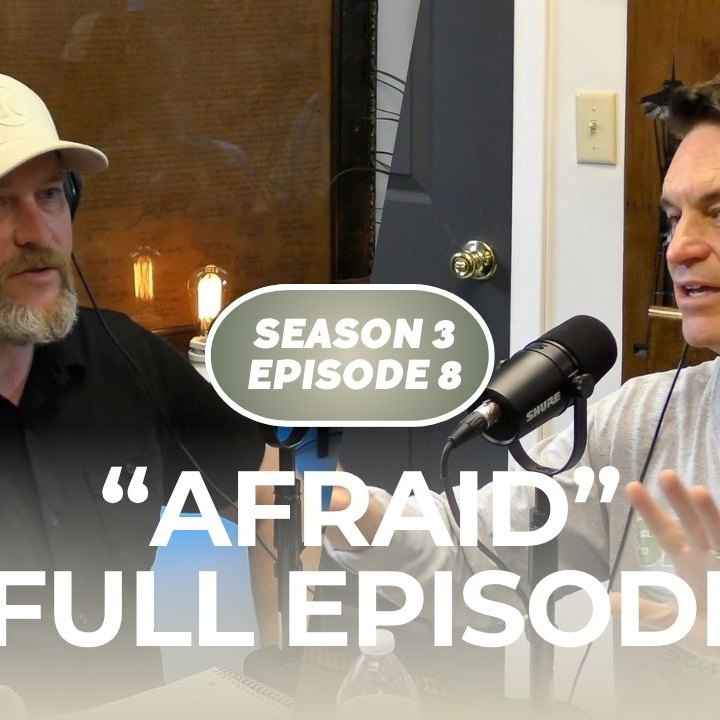
Well, welcome back to The Defined Podcast w/ Dr. Jon et al. My name is Chris. Dr. Jon, my brother, of course, is in the studio.
Howdy.
We're joined with special education teacher Robyn Nelson, self-described man of many talents Tom Johnson, and project manager Jami Troy. Welcome, everybody.
Good to be here.
I was basing that based on your last time with us, Tom. Did you want to amend the introduction at all?
You know, that sounds good to me.
Okay, that works for you. Okay. All right.
Sounds good.
Okay.
Renaissance man.
Renaissance man. That's a good one. Maybe we'll use that. Well, we are looking at the word "afraid" as it appears in John chapter 6. Our verses are 16-21. I'll go ahead and read that out of the ESV. And then there's a parallel account in Matthew 14. I'll go ahead and read that as well, just so we kind of get both accounts there. Beginning in John, chapter 6, verse 16,
"When evening came, his disciples went down to the sea, got into a boat, and started across the sea to Capernaum. It was now dark, and Jesus had not yet come to them. The sea became rough because a strong wind was blowing. When they had rowed about three or four miles, they saw Jesus walking on the sea and coming near the boat, and they were frightened. But he said to them, 'It is I; do not be afraid.' Then they were glad to take him into the boat, and immediately the boat was at the land to which they were going."
And then in Matthew chapter 14, beginning in verse 22, it says it a little differently.
"Immediately he made the disciples get into the boat and go before him to the other side, while he dismissed the crowds. And after he had dismissed the crowds, he went up on the mountain by himself to pray. When evening came, he was there alone, but the boat by this time was a long way from the land, beaten by the waves, for the wind was against them. And in the fourth watch of the night he came to them, walking on the sea. But when the disciples saw him walking on the sea, they were terrified, and said, 'It is a ghost!' and they cried out in fear. But immediately Jesus spoke to them, saying, 'Take heart; it is I. Do not be afraid.'
"And Peter answered him, 'Lord, if it is you, command me to come to you on the water.' He said, 'Come.' So Peter got out of the boat and walked on the water and came to Jesus. But when he saw the wind, he was afraid, and beginning to sink he cried out, 'Lord, save me.' Jesus immediately reached out his hand and took hold of him, saying to him, 'O you of little faith, why did you doubt?' And when they got into the boat, the wind ceased. And those in the boat worshiped him, saying, 'Truly you are the Son of God.'"
So, that's the account there. We're focusing on the word "afraid," and we'll go ahead and turn it around to the panel for opening thoughts.
All right. Yeah, yeah. Well, first I think I'll start off with a couple of jokes, see how they land.
Thank you for that.
Yeah, we'll see here. And these jokes are centered on afraid, fear, obviously. Maybe not obviously.
I used to be terrified of hurdles, but I slowly overcame them.
I'm deeply—I'm deeply afraid of elevators, so I'm taking steps to avoid them.
Oh.
Love the puns.
I used to have an intense fear of tall people, but now I look up to them.
Good thing.
Silliness. All right, so Henry Ford once said, he's quoted saying,
"One of the greatest discoveries a man makes, one of his great surprises, is to find he can do what he was afraid he couldn't do."
And I feel like that's kind of the same or could be applied also to faith. I think that when we realize, or when we've done something faith wise that we didn't realize, that we didn't prior think that we could, I think that it's one of the greatest surprises as a believer. And I just think that's, it's kind of a fun application to the walk of faith also. In the vlog, which was fun to write, because the other guy in the treehouse was this guy.
I wondered.
Didn't know.
So, that was like, that was such a fun night. Started off all cool and calm.
Did you actually see the banana slug?
Oh, yeah. Yeah, yeah.
You can confirm those things—
And the spiders.
—it really was a treacherous experience?
Yeah.
Wolf spider? Was there a wolf spider?
It was a horror show.
It was pretty bad.
I was not gonna believe it until I heard secondhand if it was true, but.
True. True.
But so, in the vlog, I think the thing that I'll just kind of call back to is the fact that the disciples had experienced so much, like, amazing things, things that they had never seen before, things that were just totally new to them, from starting with Jesus in the ministry to obviously they just saw the feeding of the 5,000 and they had just come back from like six months of ministry where demons were being cast out, people were being healed. I mean, things that they had never seen before where they were intimately involved with those things. And then it's like in this sequence, in this part of the story, it's almost like—I don't know, this is where my mind goes—like, Jesus is like, turn it up a little bit. Where he's like, you know what? You've experienced a lot. I want you to experience even a little bit more. In my mind, I started to think, like, it's like working out. Once you get to a certain place, like you could stop and your muscles have grown, but when you start putting on more weight, like the muscle will grow more. And it's like, this was such a unique thing. I wonder if that was part of it, where Jesus is, turning up just a little bit more and saying, like, you think you've seen something? Like, watch this. And when you can believe this, then it's almost like the faith perhaps that was needed for then the things they would do when Jesus wasn't here anymore. So that's where my mind went.
Interesting. I like that.
Good.
Yeah, I'll piggyback off that a little bit. Because in Matthew's account in 14, verse 32,
"And when they got into the boat, the wind ceased. And those in the boat worshiped him, saying, 'Truly you are the Son of God.'”
So, like you're saying, again, after seeing all the miracles, being with him, with this one for some reason was like huge. Where they're like, oh, again, right? "Truly you are the Son of God." Because.
Yeah. Like if they didn't, if there's a little bit like waning before, like, like, truly, truly.
Oh, this one's the one.
Like this was for sure. This was nuts. I like that.
Good.
Well, I, you know, regarding the passage, I can certainly relate to Peter. I tell people that I have a, I have a real strength, it's my ability to talk. And I've got a real weakness and it's my ability to talk. So, Peter was one of those guys, it's like open mouth, insert sandal. Right? He said a lot of things. But, you know, I thought about this and of all the disciples, you know, that did amazing things, I mean, with the Lord, of course, working through them, the Holy Spirit, casting out demons, and all the things that they probably were involved with in life throughout Peter's life and especially his experience with the disciples, he's the only one that could say, I got out of the boat.
That's right.
And so, I really relate to Peter because Peter, you know, was good intentioned, but he said a lot of things, sometimes out of place, things that perhaps didn't need to be said, like on the mount of transfiguration, there were probably some things that he could have, the disciples were probably looking at him going, what are you talking about? Maybe, I don't know. But yet he's the one, when Christ asked him, who am I? He said you are the Christ, the son of the living God. Right? So, Peter went on, God used all of that weakness that he had, the weaknesses, and he used that to become one of the greatest disciples, probably, of the faith next to Paul, the Apostle Paul. So again, the fact that he actually got out of the boat in the midst of fear shows me that he was a man of action. And he was. We know that.
Yeah.
So that, it really impressed me just to reread that story again.
Yeah, that's great. It was such a cool thing that John left it out. John was like, I'm not putting that.
He did leave it out.
I think it's kind of funny. There's always that butting of heads, it seemed between the two of them.
Yeah, the speculation would come because John's says he reached the tomb first—
Right.
—before Peter. And so, sure he would leave out that Peter walked on the water.
Right.
There's a little competition between the two of them.
Maybe.
That's so funny.
But it is funny because yeah, Peter walking on water is in this account. So yeah, it's a crack up.
Interesting.
That's funny.
My opening thought for just the topic of fear was, I mean like so many other things, it's very, I feel like it's just a topic that really is very personal to me in that there were so many years of my life. Like I felt like my entire life was ruled by fear up until a certain point. And it wasn't even until like you mentioned that we would someday be doing like this topic that I realized like that that's not necessarily a part of my life anymore. Like there's still fear. But I think it's such a, such a human experience to have fear. And what may be fearful for me may not be for somebody else, but how we kind of like look at each other and like, wow, that person's so brave or this person's so this. But maybe it's just that they're not afraid of that particular thing. And so, I was really excited just to dive into this topic more because I think that it is something that affects everybody to some capacity. And I also think it's something that like, I mean there's just so many instances in the Bible where we are charged with do not fear and then, but how the Lord meets us in that and allows us to overcome that, I think is his heart for us, that we're not bound by it. You know? And so, I was pretty excited about it, I guess, and excited to see what you guys have to say on it too, so.
Yeah.
Yeah.
Good. Well, one thought on using the word afraid or fear, you got to know what the Bible is referring to, because there's multiple ways that can be interpreted. So, it could mean fear, terror, or reverence and respect. And so, basically, it's not like a contradiction when the Bible says don't be afraid, but fear God, you know, it's like, well what are you, you gotta know what the Bible's talking about, right, to interpret that properly. So, basically, if you are in awe of God, though, he's saying that can kind of eclipse, you know, other problems, right? Kind of as is evidenced by Peter there. Right? As long as his focus is on God, it kind of should eclipse even waves, you know, even drowning can be eclipsed by focusing on Jesus, so. And one thought is that, where did fear first appear in the Bible? And you go back to Genesis, actually, in Genesis, chapter—
Three.
Genesis, chapter 3. So, Genesis chapter 3, starting in verse 8 out of the ESV, and it's speaking of Adam and Eve,
"And they heard the sound of the Lord God walking in the garden in the cool of the day, and the man and his wife hid themselves from the presence of the Lord God among the trees of the garden. But the Lord God called to the man and said to him, 'Where are you?' And he said, 'I heard the sound of you in the garden, and I was afraid, because I was naked, and I hid myself.'”
So, here we have the account of creation. And in all creation, including, we'll include the serpent in there, everything, the first thing that man is afraid of is God.
Right.
Out of everything. Isn't that something?
That's pretty wild.
And it's because the relation had changed, right? His relationship with God had changed. Something had been altered from the original state. And now the relationship is one of fear. Not like the good fear.
Right.
Not like the reverential fear. He's actually like, afraid of, well, because of his state, he realized that he was naked.
Yeah.
Naked and afraid.
Okay, I just thought about that. Like, how messed up is that title now that you just read that? Naked and Afraid. It's straight from Genesis.
Right.
It was because I was naked, I was afraid. Let's make a show, Naked and Afraid.
Apparently, I have thought about this because I have a few notes right on that section. And it's when they, their response to that is they go and they hide themselves. And I said, what did they think hiding would accomplish? Would it delay consequence? And then I said, did they fear or were afraid of God? Because had they had a concept of his anger at this point? Like, there was so much introduced in that, like that one act that it introduced fear. There was no fear before they sinned. I just think it's super—I mean, I feel like we could spend a lot of time sitting right there with that alone.
Right.
But.
Yeah.
That was the very first time that we, men, women, separated ourselves from God because that was the original sin, right?
And I don't want to get off on the topic too far, but I just, the things that I thought about, if you would allow me for a moment.
Naked and afraid?
Naked and afraid. Is that, you know, me being a married man, I, you know. Being married, you can reveal yourself to your wife. You know, not just the whole idea without clothes on, but it's actually, to be honest, as a married guy, it's actually more scary to reveal other deep, personal things in your life. And here, this relationship that God created between man and woman was supposed to be unashamed and so forth. And all of a sudden, they are trying, not only are they ashamed of each other, probably, but they're ashamed before God. And they tried covering themselves with what? Fig leaves. But what did God cover them with initially, after? They tried—
Clothing.
Animal skins.
It was animal skins. And where do you think those animal skin came from?
Yeah.
Sacrifice. So, ultimately a shedding of blood had to take place in order to be able to have that covering. And we know that obviously the ultimate sacrifice was with Christ, that shedding of his blood.
Yeah. Such a foreshadowing from the very beginning.
Yeah.
Yeah.
That's really good.
Yeah. There might have been something even in Adam and Eve, like in their being that somehow knew kind of what 1 John, chapter 4 is talking about when it says in verse 17,
"By this is love perfected with us, so that we may have confidence for the day of judgment, because as he is so also are we in this world. There is no fear in love, but perfect love casts out fear. For fear has to do with punishment, and whoever fears has not been perfected in love."
So, they would not have had a concept of redemption yet from the punishment. And it might have started to creep into their mind that there might actually be death involved here or, you know, some kind of consequence to the disobedience. Because what could they have possibly known up to that point, you know?
Right.
Only basically a fear of judgment, a fear of consequence, a fear of what would come next, you know?
Right.
And so, it's kind of interesting that it's like in their DNA that there's something to be afraid of when there's a separation from God or a changing of the relationship with God at least.
Right. Yeah. Something changed.
That's really good.
Yeah.
Yeah.
Again, I don't mean to hog the conversation, but as long as we're talking about that passage, the whole idea of fear of punishment, you know. How many of us, as Christians though, either with ourselves or with other Christians, we long to have the shame and the guilt that even though we say as Christians that Christ has covered that, but we still, daily, we wrestle, do we not? Even on maybe a small, maybe almost surface level, we're still—underlying, we're not telling people this perhaps—but we're walking around, are we not? We're not completely 100% free of the things that are associated with punishment, guilt, shame, whatever. We wrestle with it from our past. I'm just wondering if maybe we could, I could open that up and ask you guys to speak to that as to are we supposed to expect then that we will never be, in this imperfect life, that we'll ever be completely perfect in that? In the sense that we know that as we're covered by the blood of Jesus, that there is no sense of guilt or shame? Or are we going to always wrestle with that to some degree? Because I know that we hear that a lot within our churches today, but can it really be attained in a 100% way in this life?
Yeah. I was thinking when you were proposing that question, it's a series of choices, like going back to Genesis 3. They, God put the tree of the knowledge of good and evil in the garden and told them not to, not to eat of it. Right? But we have free will. Like that's a free will thing. It's there. We can eat of it, but we get the consequences of it as we. For me, what I was thinking when you were proposing that question is as our life goes on, we choose different things based on outcomes that we've already been through. Right? We learn from the choices that we make that are bad or that have bad consequences, but we still get to choose them. And sometimes we choose the same things over and over that are bad. Right? So, I don't know. But I know that as we get older, and we have more experience and more wisdom—like it talks about in Proverbs, we'll probably get to that one—you know, we tend to learn a little bit more. But it's still our choice, right? We still can choose to mess it up.
Yeah. I do think that there's, I mean, as a therapist, that's definitely a, the, where I land is, yes, there's a way to live this life without condemnation. And I think that there's a difference. Well, I'd say for the believer, that's way more accessible because we know Scripture says there's now no condemnation for those who are in Christ. So, when I work with clients and they're like, okay, I, like if they're a believer, they're like, okay, I believe that God forgives me, but then it turns into like, can I forgive myself? And I think that might be a little bit more maybe in line with kind of the sentiment you brought. And to that, I'm pretty sure I caught this from Jordan Peterson, but the idea of self-forgiveness is kind of like there's the prosecutor attorney and then there's the defense attorney. We're really good at being our own prosecutor. I mean we can like, yeah, you're condemned, you can't even, you did this. And that brings back some old stuff too. We can go back to like 10, 15, 20 years.
Yeah.
The defense attorney doesn't really get too much of a say. And so self-forgiveness in this regard, it can kind of, just ask yourself, what would a defense attorney say?
Yeah.
Like, can you, like, it doesn't like justify poor behavior, but it's giving a little bit of like, okay, where were you at in this moment? Like, what were some reasons why this happened? Again, it's not to like, abdicate responsibility, but it doesn't, but it's to help guard against like the avalanche of guilt and shame and condemnation from ourselves. We're forgiven.
Right.
And so, that's the part we have to remind ourselves too. Is if we're forgiven, then we're only—actually, if we don't forgive ourselves or we carry this guilt, it's as if the work of Christ is meaningless, which, that's a bigger issue.
Right.
Yeah.
I wonder if it's like a muscle, like a, like so many other things that involve our faith, like we, it might not be like, oh, I met Jesus and the day after, I'm totally free from any feelings of guilt or shame. And I think that, I mean, because the Bible does say that he whom the Son sets free is free indeed, and that word indeed is actually meaning all the way. So free of every kind of like shame and condemnation—and accidental, I did not just swear there but it sounded like it—but like if it's more that as I continue to walk out with the Lord, I am now trading this shame that I had over past experiences or past like identities or whatever that is. And I'm trading it now for the truth of Christ in my life. Just like I may feel afraid, but it doesn't mean that I have to walk in my fear. And I may feel shame, but it doesn't mean that I identify with that shame. I get to now trade that in for the truth of Jesus Christ. And I do think it might be worth noting that there is a difference between guilt and shame. And one is like guilt about an action. Shame would be feeling like a condemnation about who I am as a person. And a healthy amount of guilt is part of our Christian walk. It's like, so I did this thing and I'm feeling guilty about it. And this actually may be kind of a good thing cuz it says that I'm still aware of like the presence of God in my life. I'm still aware of right and wrong. And I don't want to necessarily repeat what I just did there. But when we turn that into less of like, "I did a wrong thing" and more of a "I am a wrong person," then that like brings a whole sense of shame and condemnation on us that God never intended for us to walk in. And that may be what Adam and Eve are experiencing. It's interesting that as soon as they sin, then they try and hide. There is a sense, like an inherent sense of shame and then also like now a fear of that and like it may just kind of all be connected. But anyways, all that to say, I do wonder if it's like a muscle that we start to work out. The more that we walk with the Lord and we just have to like kind of tackle one thing at a time and so I get stronger in this area as I go, maybe, that.
What do they call it, sanctification?
There you go.
When living out. So, I appreciate that example, you know, being able to use that as a muscle, so to speak, quote unquote, in helping to maybe not feeling like you're going to completely eliminate the fear of punishment, but realizing that what Christ did on the cross, that's something that we can work toward. Somebody told me one time that everybody on the planet, we get up in the morning and we always have this gap between what we expect would happen in our lives from a perfection standpoint, even though we know it can't happen, but there's always a gap between the perfect that we long for and the imperfect that we end up attaining during the day, whether that's being cut off in traffic, getting irritated at somebody for doing something in our work, or whatever it is, there's always that gap. And why don't we actually factor that gap in every single morning, saying, okay, this isn't going to be a perfect day. I got to factor that in. But, yeah, realizing that the more we practice that, work out our faith. Is it work out in fear and trembling? But that sanctification process, maybe the fear of punishment becomes less and less in our lives.
Yeah. And in 2 Corinthians, it kind of addresses some of these issues here. Some of these words pop up that we've been discussing. And just kind of keep in mind the analogy here, like the tent is the human body, you know, as I read this here, and we're looking for a time in the future, our heavenly dwelling, right? So, there's a situation now where we might not entirely feel 100% at home. And this passage will kind of explain it. 2 Corinthians, starting in chapter 5 and verse 1 out of the ESV.
"For we know that if the tent that is our earthly home is destroyed, we have a building from God, a house not made with hands, eternal in the heavens. For in this tent we groan, longing to put on our heavenly dwelling, if indeed by putting it on we may not be found naked. For while we are still in this tent, we groan, being burdened—not that we would be unclothed, but that we would be further clothed, so that what is mortal may be swallowed up by life. He who has prepared us for this very thing is God, who has given us the Spirit as a guarantee."
So, we've got this guarantee of the Holy Spirit. In the meantime, while we wait, while we have our current bodies, we want to be further clothed in the life to come, right? So, we've got an element of shame still, right? Perhaps. If we're, or at least we have the tendency to think about shame. We shouldn't. But we're longing to be further clothed, right? Further clothed means even less shame, right? Using the analogy of naked and judgment and all these things, right?
Give me a parka.
There you go.
Then in verse 6, it says,
"So we are always of good courage. We know that while we are at home in the body we are away from the Lord, for we walk by faith, not by sight."
Then it says again in verse 8.
"Yes, we are of good courage, and we would rather be away from the body and at home with the Lord. So whether we are at home or away,"
that is, dead or alive, right?
"we make it our aim to please him. For we must all appear before the judgment seat of Christ, so that each one may receive what is due for what he has done in the body, whether good or evil."
Now, that can be read with nervousness or it can be read with excitement. Right? We can be excited about the judgment. Right? It says whether good or evil. So, if you find yourself kind of lamenting this current state in the flesh and sin, like Hebrews says, run with endurance, right? Let go of the weights, let go of the sin that clings. So, it's a, it's a race, it's a process. Right? Like you're talking about sanctification. In the meantime, we can be expectant of a good judgment. Right? Good things. It says of good courage. Right? Well, that's not fearful. That's not, that's not afraid of punishment. Right?
Right.
It's actually saying we can be of good courage.
Yeah. With the judgment.
Yeah, with the judgment being on the way.
Right. Because believers shouldn't be fearful of judgment because it's something, yeah, that's to be, actually, yeah, like it says, to be excited about. It's like if you, I don't know, if you submit something that, you know is a very good piece of art and it's to be judged by the jury, you're excited to be like, I can't wait to see what they come up with. Yeah. So, I think that's a good indicator. If somebody is fearful of the judgment to come, then that's a good indicator of they need to probably get their lives right with Christ, because there should, there's no fear once you're in Christ. Yeah.
I like the idea of, you know, the idea that we're groaning because of sin and the fact, the reality of sin in our lives, we all are groaning. Which to me, if we're groaning, we recognize our sin. Right? And the Bible talks about how the law came to help recognize our sin, but Christ is the answer to that punishment that we should have taken due to the fact that sin came into the world. But that groaning indicates, I think, that we realize that we're struggling, and maybe in that struggle, what we're talking about here, we can remind ourselves that, hey, we are struggling, but we really want to do the right thing, and maybe that will help us—I know as I'm talking through this—that can help us give ourselves grace in that sense. Because the reality is that we are groaning. We do not want to remain in this place, which to us as believers, that should be a strong indication that we've got our minds in the right place. Right?
Right.
If we weren't groaning and struggling, we're out partying, doing whatever kinds of sin we could find ourselves into and didn't really care, then that would be—but I think sometimes Christians can be the most hard on themselves, but yet we have the answer, and we need to have more grace towards ourselves.
And I think too, that Scripture kind of shows just that, having some worry, fear, that doesn't mean, like, you're a bad Christian. I mean, we experience, I mean, because we, when sin entered the world, we now experience things in our minds and bodies that we were never supposed to, like, hold on to. And so, it's not because I have anxiety, or I'm experiencing anxiety, or I'm experiencing depression, that therefore I'm farther away from God. Not what that is at all. It's the groaning, I think, that kind of more plays into that, which is this is just part of being human is it's tough and it's more difficult than it ever was meant to be because of sin. And so, yeah, I think a lot of people can get caught up in if I was a better Christian, quote, unquote, then I wouldn't have this anxiety, I wouldn't have this depression. No, it's just like we're in a world and we're experiencing stuff that we were never meant to, psychologically, physically. It's a crazy pressure when sin entered the world.
Right. And even right now, especially, like the current time that we live in where we have access to information that we should never have access to. There are like, there are studies that have been done and there, I think some sociologists that have mentioned, like, in an ideal situation, in the way that our ancestors grew up, you would only really know about what was going on in your, like, your most immediate community. And right now, that we have knowledge of what's going on all over the world all the time, and we can't do anything about it. And even, like, what that does to our, like, our brain psychologically, that we are trying to, we have this pressure of caring about everything, but there's nothing we can do. And we're taking in more information than, like, our, like, even our own grand, like, just our grandparents, what they would take in on, like, in one day. We have access to, like, phone notifications, news, social media. You are, somebody is always able to reach you. And I think that what that does to us, even now, that only increases fear. Like, instead of it being like, oh, I have peace because I, maybe I have all this knowledge all of a sudden. Instead, it's this pressure of I need to, like, okay, so it used to be just like, I just need to, like, brush my teeth and, like, take care of myself and etc. etc. Now it's like, well, you need to avoid this caffeine. You need to, this endocrine disruptor, this and this and this. Like, there's constant pressure all the time on everything. And I think in ways that we were never intended to experience, even more than just sin entering the world, it's like a multiplication of, like, things that you could be fearful of all the time. And so, if we're, like, not working that muscle, like, we are, we're just subject to what's coming at us all the time.
Yeah.
So, is anyone encouraged by that?
Well, you know, I didn't want to. I didn't want to jump.
So, what do we do about it? Solutions, please.
That's what I mean, though. Even more so, I think that this is actually, this is so, yeah, now I'm getting fired up. But, like, this is what I mean. There's more anxiety now, and you would know this, than there ever has been, especially in young people. So, I don't think that this is, like, an isolated thing, and I think that it would be just like the enemy to try and convince us. Like, you're the only one that is fearful of this. You're the only one that has so much anxiety in your Christian circle. Like, you're the only one. And in fact, it's not. It's just not true. It's actually more than ever before. So, if this is the world that we're living in, how, as believers, can we be like, people that, like, walk in victory and not because we're bad if we don't, but because, like, I want that. Like, if Christ died on the cross for me so that I can live in total freedom, I want to have access to that. Like, I want to, I don't want his death to be in vain. So, I guess that's what I'm trying to communicate here.
Was there a third question? I'm trying to remember. I put all these things together. But the idea of how we can, you know, take action to help shape our behaviors that would help us to move away from fear?
Well, one of the concepts, I guess, in cognitive behavioral therapy is just that thoughts lead to emotions and emotions lead to behavior.
That's what it was.
And if fear is an emotion, the one in the middle, what thoughts can we dwell on to help shape that emotion so that it is not fearful, or shape our emotions so that we are not fearful? And then on the other side of it, to what end? What behaviors are we trying to shape as a ultimate result? As a result of not being fearful, how will we act differently? So, if the Bible says do not fear, then what thoughts can we use to help make that possible? And then what behaviors is on the other side of that that are, that is trying to be shaped as well?
So, I was going to speak to what Robyn said. In the world that we live in, that's filled with all kinds of media, we have access to social media and all kinds of things coming at us during the day, right? And a lot of it's, you know, on the surface it may look like, okay, it's good, we need to be informed. We need to know what's going on in our world and around us. But in other regards, in other ways, it's not so healthy for us. And I was just thinking of all the qualities that I appreciate about being a Christian. I mean, there's many of them, obviously, right? But for me, peace. You know, I feel a lot of times, especially in my life, that there's things that have been going on, and I mentioned the idea before we got started, some of the struggles I've had in the area of fear. But peace is something that I really, really want to fixate on and focus on. So, there's a verse that I've got up on my wall, and it's Isaiah 26:3,
"You will keep in perfect peace
all who trust in you,
all whose thoughts are fixed on you! (NLT)."
And the whole idea of fixing on Christ and for the purpose of that perfect peace abiding in your life. And so, I think there, what Jami was saying, I think making decisions throughout the day, even micro decisions, little tiny decisions that perhaps we're not even necessarily focused on, that maybe we should be focused on, decisions that allow our minds to saturate, be saturated with all kinds of things that do not bring us that peace that cause us to fear, so that when we meet somebody out on the street who is fearful of all the things that are going on, we're going to be grounded in Scripture and solid words from the Lord about how to address that with them. I'm saying all this because it's convicting as I'm even talking, I'm processing as I'm talking, because that's what I do. And it's really being convicting to me that I spend too much time online and whatever it might be. And some of them may on the surface look very healthy, but in the end, at the end of the day, it's like, what have I filled my mind with? What experiences could I have chosen to go a different direction that would have given me more peace, that would have helped me not be afraid, that I could sleep in peace? And so, I, you know, to your point, we have access to all of these things today and it's just coming at us right and left. But we can make choices throughout the day to filter and to decide what we really want to think about in our minds.
And that's, yeah. It's kind of a case-by-case basis too. It's like, what is causing me fear or what is causing me peace? You know, what helps shape that? For example, a steady stream of news, that might be critical for a journalist to, for their job, you know, but for perhaps the average person, a steady stream of news might cause worry or fear or something like that. Because constantly knowing about some conflict thousands of miles away might make you a little nervous. You know? I was thinking as I was traveling along a highway, just trees all around. I just thought, you know, the planet sure could, we're not at capacity. You know, there's a lot of empty space out here. And to have a little cell phone that focuses on a conflict of a group of people. And all of a sudden that's what's in my mind. Even though there's not a person around in any direction on this highway out in the middle of, you know, spacious area.
Yeah.
It's, our perception of the world can be shaped by what we're dwelling on so much.
I think it'd be funny if you ask somebody like, like someone who watches news, like a lot of news, like, so why do you watch so much news? I don't know. I don't. Like, they might have an answer, like, to be informed, like, no, but no, like, what do you. Like, what's the, why? Like, what's the point? Like why? And then like, just keep on asking. No, but really.
Why do I need to be so informed?
Why? Like, what's it really doing for you? Then I think if somebody who digests a ton of news would be honest, they would probably say, actually, it's not really doing me personally any good. Yeah, the journalist. Yep. Helps their job, helps, actually is to help them to be productive. But for the average person, it's like, why? Why are you watching so much? What's actually doing it for you?
Good.
Yeah. Really quick, though, with just kind of piggybacking off of the thought of, like, cognitive behavioral therapy—thoughts, emotions, behavior—yeah, when the Apostle Paul says, take captive every thought, that's a really important thing to remember. And it's interesting in, like, Philippians, Philippians 4:8-9. So, what, yeah, so what should we be dwelling on? What should we be thinking about? It says,
"Finally, brothers, whatever is true, whatever is honorable, whatever is just, whatever is pure, whatever is lovely, whatever is commendable, if there is any excellence, if there is anything worthy of praise, think about these things. What you have learned and received and heard and seen in me—practice these things, and the God of peace will be with you."
And it's interesting, this comes right after it says,
"do not be anxious about anything, but in everything by prayer and supplication with thanksgiving let your requests be made known to God. And the peace of God, which surpasses all understanding, will guard your hearts and your minds in Christ Jesus."
So good.
Now kind of like interchanging anxiety and fear a little bit, and anxiety and fear aren't the same thing, but it can definitely, there's a lot of overlap with those two. One's more prolonged, one's more immediate.
Okay.
Fear is something, it's something usually right in front of you versus something that's an unknown. But it's still, it's, what we're looking for is peace.
Right.
And when Jesus says, peace, I give to you, I mean, yeah, this is a blueprint on how to get peace in a world that is wild and crazy and getting—we're just more connected than we've ever been, obviously, we just talked about. But, yeah, think about things that are good, true, lovely, honorable, etc.
Good.
That's good.
You can't talk about fear without talking about David. Right? And Goliath, obviously.
Yeah.
So, going there, David did not operate in fear, right? He walked in the confidence of God and had faith that God was on his side. He killed bears and lions to rescue his sheep. And when he heard about what Goliath was saying against the army of Israel, he was PO'd, you know, and he's like, how can this happen? Does he not know who we are? Right? And he had that confidence, right? He was just, that's just who he was.
I love that.
And obviously we know the end of that one. But he also wrote, it's argued that he wrote many of the Psalms too, right? And Psalms 56:3,
"When I am afraid, I put my trust in you."
And that's also David, right? And Saul, it talks about in 1 Samuel. Saul was afraid. He was afraid of Goliath, but he was also afraid of David because David was, you know, with God. David walked close with God, and it infuriated him. Right? So, he tried to kill him.
Yeah, that's a good point because David, because David had an accurate idea of who God is.
Right.
For that reason, he was not afraid of Goliath because his perspective was correct.
Yeah.
But someone like Saul, you know, he even referred to God as, like, Samuel's God, "'the Lord your God,'" is how he referred to God, you know.
That's interesting.
He did not internalize it. He did not internalize a relationship with God the same way that David, as evidenced through writing the Psalms—you know, putting his trust in God, that's, there's no, when he's afraid, he will trust in God—he had a whole different perspective. And so, yeah.
Yeah.
And David wasn't that—I mean, does the Bible indicate this? I think it does, right? Especially, like, when he went to Goliath. In physical stature he wasn't that big, right?
Right.
Right.
Like his brothers, didn't they kind of—and Goliath, you know, was talking about, you know, you're puny. So, you know, he wasn't probably physically big and tall and strong and built. And yet, yeah, he had that fire, you might say, in his bosom when he went to go attack Goliath.
Yeah.
Yet, you know, you see where David was not a perfect man in that and didn't always live perfectly within the confidence of the Lord. And when, of course he did what he did with Bathsheba, instead of, you know, facing that and being not afraid to face that fact, he, in a sense, you could say he did fear because he was trying to cover it up and put Uriah on the front lines, right? Killed her husband indirectly there. So, he wasn't perfect in that. But yeah, I think in that, in those moments when he was facing Goliath, it's, it would be, I would love to know what—I don't know. Maybe some of us have felt those experiences in our lives, the David and Goliath experience, when it's like, you will not mock the Lord God. You know, we are, when we're on the front lines. And I've been in some situations like that in the past where it's like I feel like God's Spirit has come upon me and I'm standing with conviction. I can't think of any one particular right now, but I believe anyway that that is probably the case. But that those moments when he was, you know, basically, Goliath, you're not getting away this time, buddy.
Right.
You know, those are, those are great moments. You're not, you're not afraid. You're completely immersed in what the Lord, you know, the Lord's presence is with you, and you know your direction. If we could only hang on to those, that kind of feeling in our, in our daily lives.
Yeah. Where it goes back to Peter. He started to sink, right?
Yeah.
He didn't hold on. I mean, I wonder what kind of confidence that would have taken for him to stay on top of the water and that type of faith. But ultimately, he wavered. Right? And started to sink, so.
Yeah, so—
I don't know.
I was just thinking, that's really interesting with David and Goliath. And then you have Peter. One thing I kept thinking about with Peter, it wasn't the John Scripture, it was Matthew, which I can't find anymore. What was the reference on it? Do you guys have?
It was Matthew, chapter 14.
Oh, okay. I was way off.
14:22, I believe.
Okay. So, Peter, he. Jesus is walking on the water and then Peter's like, hey, Lord, if it's you, call me out on the water. Which I just think is, I can't. I cannot, like, stop thinking about that. He could have just stayed in the boat. David could have just stayed back. Like, there was no, like, long, like, session of prayer of should I do this? Should I not do this? It was like, just this confidence. Like, this is the thing I'm going to do. So, with David, like, how dare Goliath, you know, speak the way that he's speaking against God. And so, he will not be mocked. And he's just like, something has to be done about this. And he goes forth. There's no, like, word from God that I will be with you in this or that you will be successful. He just was like, this is wrong and I'm not going to stand for it. And then I think that the Lord met him there. And similar with Peter, like, why would he be, like, call me out onto the water when he could have just stayed in there and, like, let the Lord come to him? I can't, like, really understand or like, grap—I'm grappling with that. Like, what is that? What was in him that decided that I needed to take a step of faith even when God wasn't asking me to take this step of faith? Like, what was it in him that drew him out to want to, like, meet the Lord in that way? Because I think our tendency is we may feel like God is maybe drawing us to something or calling us to something. And I'm actually like, okay, I'll do it, Lord, if you confirm it to me like six times first. Like, and then maybe I'll take a step out. But it is this, like, I'm like, if this is you, you're gonna tell me to do something radical right now. And I also think that that was interesting. Cuz if they were under the impression of thinking it could have been a ghost, I feel like a ghost could have just as easily done the same thing. Been like, yeah, come out on this water. And then he could have just sunk. Like, so I don't know if anyone else is like, am I, if I'm overthinking it, but I just can't, this whole scenario to me blows my mind, like, why and how this came about. Because maybe Peter and I are just very different people, but.
I always wonder, like, who was the first disciple to say it's a ghost? Like, and then all, like, I mean that's—
Probably John and that's why he didn't record it.
That's kind of a vulnerable thing to say, to be taken seriously by everybody else.
I feel like everybody was like, kind of like freaking out. Then one guy's like, it's a ghost. Everybody's like. I mean, right?
But then they all agree.
But then they all agree. I guess. I don't know what it is.
Yeah.
It's. Different take on it, completely a bit. But I kind of feel like that after all this, maybe Thomas is like, really? I'm the one that got like the Doubting Thomas label? Pretty sure Peter was doubtful. It says like, exactly, it's almost like exactly like the Thomas account. Jesus is like, it is me. Well, prove it to me. Which I think that's kind of an interesting bit too, is, is in that, it's weird because Peter, obviously, he's, this is a segment where he's credited of having great faith because he stepped out of the boat like you said. And yet he still, he didn't trust Jesus. Jesus said, it is I. And then he's like, well, prove it to me. Just like Thomas is like, well, prove it to me that you are Jesus. Let me put my hand in your wound and then that will assure me. And so, it is interesting that like, we crave proof and faith is something that is so, I think, difficult for us as humans because we want what we can see. Not what we can't see. And God's like, yeah, but this is a lot of how I operate is you have to trust me. And when you trust me, our relationship grows. Yeah.
And the fear was real. They had, they thought there was a ghost. The wind was all around them. The waves were real. So, you know, faith here isn't the absence of real danger, it's choosing a different anchor point in spite of it. And the anchor point, of course, with Christ. I find it interesting that when Jesus, or when Peter gives that plea to save me, that Christ actually, from what I can tell from the Scriptures, that he reaches out and he grabs him, grabs his hand, I think, before he then gives him a gentle rebuke where he says, oh, you of little faith, why did you doubt? So, he's actually grabbing him first and then does the gentle rebuke. So. But yeah, I thought that was interesting, that it's the fact that there were real things to fear here, but in spite of that, it's the whole idea that Peter was focused on the, another anchor point that was Christ, is Christ.
Yeah.
Really quick, just off of what you were talking about earlier, Jami, about David and Goliath. If, have you guys been watching House of David at all?
I, no. The movie? Or no, it's a TV show.
Yeah, yeah. The way that they depict that particular scene, like, this is one of those moments where it's just like, I don't know, I got kind of jacked up. Like, just like, like listen to David say that to all the, all the military personnel. He's just like, basically like, what are you guys doing? Like, this is ridiculous. Like, he's coming against our God. And it's just like there was such a conviction. And I love that the Scripture and I think it just kind of plays right into it. It is, let's see here. Yeah. Matthew 10:28.
"'And do not fear those who kill the body but cannot kill the soul. Rather fear him who can destroy both soul and body in hell.'"
And I think that that was like the conviction that David was working under. It's just like, these are just men. Like, this is no one compared to God. And yeah, if you get a chance, check out that scene. Like, because I love how they depict it because I think they did it pretty spot on. Yeah. Really good stuff.
Well, earlier I was talking about how in the book of Genesis they were afraid of the presence of God. Right? And then kind of bookend that with the book of Revelation at the other end of the Bible, we've got in Revelation, chapter 6, talking about—there's probably some imagery here, symbolic language—but starting in verse 12,
"When he opened the sixth seal, I looked, and behold, there was a great earthquake, and the sun became black as sackcloth, the full moon became like blood, and the stars of the sky fell to the earth as the fig tree sheds its winter fruit when shaken by a gale."
So, we got wind and we got, hey, fig trees again, right?
"The sky vanished like a scroll that is being rolled up, and every mountain and island was removed from its place. Then the kings of the earth and the great ones and the generals and the rich and the powerful, and everyone, slave and free, hid themselves in the caves and among the rocks of the mountains, calling to the mountains and rocks, 'Fall on us and hide us from the face of him who is seated on the throne, and from the wrath of the Lamb, for the great day of their wrath has come, and who can stand?'”
So, we've got bookends here, Genesis hiding from God. We've got Revelation, we got people hiding from God. Kind of in the middle, we've got Jesus walking on the water, saying, it is I. Don't be afraid. So, what is it relationally with the disciples? Because Jesus is God, and he is telling the disciples, do not be afraid. It is I. What about his character is it that they understood that make them not like the account of Genesis, where they were hiding from God, and not like in Revelation, where they're hiding from God. Jesus says in Matthew, chapter 11, in verse 28,
"'Come to me, all who labor and are heavy laden, and I will give you rest. Take my yoke upon you, and learn from me, for I am gentle and lowly in heart, and you will find rest for your souls. For my yoke is easy, and my burden is light.'”
Could you read that one more time, please?
In Matthew?
Yes.
Yeah. Matthew, chapter 11, starting in verse 28.
"'Come to me, all who labor and are heavy laden, and I will give you rest. Take my yoke upon you, and learn from me, for I am gentle and lowly in heart, and you will find rest for your souls. For my yoke is easy, and my burden is light.'”
Interesting, the thought I had when you were saying that, because I did a little bit of extra reading in Genesis, right? Well, we all had to get there before we got chapter 3. But man's punishment is to what? Toil in the field. Right? And that labor, right? Jesus just directly addresses that in the beginning of that chapter. You know, this is in Genesis, obviously, before Jesus, right? Now Jesus, it's just interesting that he has a way to deal with everything that man struggles with now after the fall, right after they decided to eat that. He's addressing that specifically. Right? Because all of us get tired of work. Right? All of us get tired of, you know, the day-to-day things. And he's saying, come to me and I will give you rest, right?
Yeah.
Kind of like what you were saying with peace earlier. I just thought that was. It stuck out when you read it since we were going from Genesis and then you read that, so.
Which is exactly what he said to Peter, right? On the water, come to me. Right?
Right.
Come.
Yeah, yeah, come to me.
Yeah. So.
Yeah, yeah. If you want peace, come to me. And for Peter, that meant doing something pretty crazy. But the peace doesn't necessarily, yeah, that's, I don't know, something there.
Same with, Jesus never says, never fear. Or at least I haven't found it yet. Do not fear. Right? Not saying, you're gonna have fear, right? Not nev—like never fear. Obviously, we're gonna have fear. I just thought that was a little tidbit.
Well, even, even angels scare some people.
Oh yeah. Showing up and like, whoa, do not fear.
Right.
I don't know if we're supposed to talk about this, the one question. But the, when Jesus says take courage, it is I, don't be afraid. You know, he says, take courage. He doesn't say right at first, it is I. He says, take courage. And you look at the original language on that, and I thought about like Joshua chapter 1, where God tells Joshua several times, you know, take courage. Don't be afraid. Take courage. And looking this up, the original language, it really suggests the idea that you should have faith, you should have trust, you should trust in the Lord. So, Christ uses this phrase apparently almost a half dozen times in the Gospels where he's talking with various people. Like in Matthew 9:2,
“'Take courage, son; your sins are forgiven'” (NASB).
Matthew 14:27,
"'Take courage'" (NASB).
And it's Matthew, or maybe it's Mark, take courage as I—oh, that's the one we're talking about. But it's, he does talk about.
"Take courage, daughter! Your faith has made you well" (AMPC).
So, take courage. And I think to me it implied that we're to have faith, in, during that time, we're to trust. And maybe the Lord's just saying, you know, trust me.
Yeah.
You know, it's me. That's what I got out of that, reading that passage.
Yeah. I think it's interesting that you brought that up, because when he does say, do not be afraid, they're like the, like the instances in Scripture, from my memory, it is, like, in specific circumstances. So, like, Joshua facing a great army or, you know, this circumstance where they thought Jesus was a ghost and whatnot. But I wonder if, like, in that vein, we're talking about fear, but is there a place in faith for, like, healthy caution? Or like I guess like what do we think would be the difference between I am acting in a place of fear and I'm trying to walk in wisdom?
Like, how do I know when I'm, like, I'm just, like, being afraid of what maybe the Lord is calling me to step into versus I'm being just, you know, trying to walk wisely and circumspect to what's going on around me. Like where, how do we know internally what the difference is, I guess?
I'm thinking of the example of, was it Samuel when he was a boy? I think it is. Where his mom, was it?
Dropped him off at the—
Well, it was the part where. Was it Samuel? Well, maybe it wasn't his mom. I'm trying to think. Chris can probably help me on this a little bit. But where he was, he heard God's voice, and he kept, you know, going out to see if it was God, and. Who was it that, was it—
Eli?
Eli.
Yeah.
That uh—
He kept thinking it was Eli and it was actually the Lord.
It was the Lord. So, it's the idea of understanding that it's God's voice that's calling you. David, I think at that moment in time where he was with Goliath, he, the fear, he went above the fear and beyond the fear because he clearly heard God's voice—he must have—and clearly knew the mission. He was so convinced. And I think that's, when we're trying to determine whether the fear that we're living in—and I think this is one of the questions you had, Chris—the fear that we're living in is something that it's afraid, we're afraid, but we're trying to find out if God is in it. Like Moses and the burning bush, and the angel, or was it God that spoke? Daniel. The vision. The ones you were talking about, right? The shepherds with the angels. We have to clearly know that it's God's voice. And if we know it's God's voice and he's instructing us to do something like Samuel, then I think that we can go beyond the fear that we're in. And if we don't, if we're not there, I think it's really interesting. I think we should ask God, are you really, you know, please give me some clear direction. I think I'm hearing your voice. I'm kind of on the fence here. I'm a little afraid to try this. Please make it so crystal clear to me. And even in that, you know, just, even maybe a small measure of faith, you're stepping out, saying please. And I think God knows our hearts, and if our heart is really kind of, you know, wrestling with God, so to speak, and just really making it clear, I think he's, you know, that, we're really being sincere about wanting to know that clear direction. Yeah. But it is difficult. We have to know God is in that situation, and we can clearly hear his voice, and he's got something for us to do. Moses and the burning bush. Clearly, right?
Sure.
Yeah.
Those kinds of situations, if we, if we're in those kinds of situations, clearly God wants us to, to go ahead despite our fear. Move ahead despite our fear.
Yeah.
And if it's not moving ahead, perhaps just replace the emotion of fear with a different emotion. Even if it, if the discernment says do not take action, then, if it's not God telling you to step forward, then replace the fear with resolve or some kind of confidence that this is not the right step for me to take right now. Either way, fear shouldn't be part of it. Replace the fear with something but let discernment decide or help you decide what the proper emotion is, the proper approach to take towards this situation.
Yeah. Because once you realize that the thing that maybe God's telling you to do is good, and then that's settled. I mean, I think that's a good gauge too. Is like, is the thing that God's calling you to do, is it, does it line up with his character, with what he would want, you know, a follower of him to do? That's a good first step. And then, like, if there's then hesitancy after we know that it's a good thing to do, then I think that's more probably psychological perhaps.
I was just thinking, like, for—because, I mean, everybody's different—but I know with me, in my own lifetime of fear, there's a lot that I'll do, like, I've done, but sometimes I'm gauging a decision and I'm wondering, am I trying to, am I trying to go for, like, the wisest possible thing, which is what I'm telling myself, or am I just responding in fear? And there are people out there that are just so decisive. I don't understand how they, they're just like, well, I'm just—like David, like, this is wrong and I'm gonna do something about it. You know?
Well, and I mean, some decisions have big consequences, but a lot of decisions don't.
Yeah.
I mean, you can do something, and then if it doesn't work out—I don't know. I think that if we move forward and we ask God for wisdom and like, for instance, if we feel like God's telling us, okay, give half your paycheck to some, you know, organization or some person. And so, we do it. And even if God's like, I did not say that.
Right.
Like, that was, I was not telling you to do that.
Right.
Wow. I don't think he's going to be like, well, sucks to be you.
Right. Right, yeah.
I think that he appreciates us stepping out in faith, even if we're not necessarily hearing him 100% accurately. But we, we're like, God I think I'm hearing you in this. I'm going to step out in faith and do this. He won't leave us hanging and like, well that was stupid.
Right, yeah.
It's like, I don't think he says that.
Some might need to work through how highly they value their own time and their resources. Because if you do make a mistake, you got to redo it or you got to start over again. Well, if you have an unhealthy valuation of your own time and your own resources then you wouldn't take the step to begin with. And maybe that's what needs to be worked on, is, like, you're not that important in the big picture, like, that you protect your resources and protect your time and protect, you know, it's like.
It's true. Yeah.
That can be a hindrance.
Yeah.
You can afford to, quote, unquote, waste some time and waste some money. I mean.
Right.
That could do you some good.
Well, and it, it just sounds like it all goes back to our perception of God and, like, his goodness over us. Like, is he big enough to cover my mistakes kind of thing, even if I make them. So, you know.
You know, they call it dangerous prayers, quote, unquote—I'm not sure why they use that term; I don't mean that regard—but it's just this whole discussion that we've had the last 5 or 10 minutes is a challenge to me. And I'm going to leave this podcast today thinking about this more, maybe praying on the way home. I mean, how many of us would pray prayers, Lord, put us into positions more like the David and Goliath situation. Put us into situations like Moses and the burning bush. Put us in the situations where, you know, we're going to have some apprehension, but we want to, we have this desire that we want to be used of God to do great things for God. Obviously, we, we're not going to do it, but God working through us. How many of us on a daily basis ask those prayers really continually of God? You know, it's this idea of if we ask God for patience, he's probably going to put us in situations that we have to sort of exercise that patience muscle. Right? So, it's a real challenge to me. Do I really want to pray consistently, and with conviction, these prayers that say, put me in situations like that? I want to be on the front line. I want to do this or whatever.
Right. Yeah. I mean, one of my regular prayers is I want to be like the most useful, like as much as God has for me in this day and in this life, like, I've asked that God will develop in me whatever highest purpose he has seen in me to begin with before I was born, help me to fulfill that, whatever that looks like. And if that means some things, some stretching, some growing, obviously there would necessary—there would have to be some pruning, all these things which are uncomfortable. But I don't know, I just don't want to, like, when it's all said and done, it's like, well, you know, 75%, but man, I had 100%. I had some more for you to do on this life. And man, if you just would have, whatever, X, Y or Z, that would have been great. A little more faith, a little bit more trust. It's like, I don't want to like, get up there 75%. Good job, 75%. It's like, man, you were supposed to do this, this and this. That would have been so great.
You were a real good bench warmer.
That's right. Yeah, that's right. You were like in the game, but not in the game.
Well, any closing thoughts as we wrap up this topic today?
Absolutely. I think I'll just go back to kind of what I opened with, is that the disciples, they saw so much before this account, amazing things that Jesus did, amazing things that Jesus did through them. And I just thought of this little, this thought, is, what if a higher degree of difficulty or unbelievability is exactly what God uses to develop a higher level of faith? And so, if there is things in our life where it seems challenging, is difficult, it's things that we don't even—like, I never seen this before, like, it looks like a ghost, is how out of the box this is—what if he's using those things to develop a higher level of faith? He did in the disciples. The disciples at that moment were like, this is, this guy is even more different than we thought that he was in that moment. So, yeah, I just think the struggle can be very very good if we interpret it as such.
Yeah.
Yeah.
Good stuff.
Since you brought up in your, is it blog or vlog?
Both.
Thanks.
You got the blog.
Alex Honnold. Shout out.
Oh, yeah, yeah, yeah.
He says he works with the fear to climb. Right? But I strongly believe that he had to have been okay with the chance of dying in order to climb, you know, Free Solo, that El Capitan. But he says he works with the fear. So, it's not that he has conquered it. Right? But he works with it. Since you brought it up. And then also since you brought it up in the blog, in the tree, you know, if you didn't turn that light on, we would have never known how bad it was.
Well, that's pretty true.
And we were jamming out, right? And we had our goodies and we had our snacks and fireworks and booby traps, and we thought we were set. Right?
Yeah, we were too.
Everything was set, except for it really wasn't. So, if you would have never turned the light on, we would have never known what kind of peril we were actually in.
Right. Right.
Obviously, we were kids. But God, also, we are all subject to him turning the light on and showing us where we're at. Right? And if he doesn't, or if we don't allow him to, we're just gonna stay, in the treehouse scenario, we were sleeping with slugs and spiders and bugs and water and things. Right?
Yeah.
So, I just thought that was interesting. Bring it back full circle. Great, great blog too, by the way.
Oh, thank you, thank you. Yeah, we all got banana slugs in the closet.
Brother.
Yeah.
This has been surprisingly a very good study for me. I'm gonna walk out of here being challenged. And you guys did a great job. And again, it was a privilege just being with you today. And I think the Lord used you well, in my life. The whole idea that I need to step out more, not let fear keep me down in many ways, try new things. And yeah. Really seeking God's voice amidst even my fear if the Lord wants me to do certain things in my life. And I want to, as you were talking about it, you know, when we die or whatever, you don't want to be partway there. You don't want to be 75% there as far as what God wanted you to do in your life. And I want my life to be completely used of the Lord in all the ways that he wants me to be used. So, I need to maybe be a little bit more in tune with what God is telling me. And maybe I need to sort of shut out some sounds, too, that I don't need in my life—what we're talking about with the noise from the news and the press and social media—and really focus in on what the Lord is asking me to do, pray more, seek his word more, and really find out if I'm really living the kind of life that God wants me to live right now. So—
There you go.
It's a challenge.
It's good, though.
I'll take some of that for me, too.
Okay, so closing thoughts. Actually, I like what you were saying about turning on the light. In the—John, the Scripture that we were reading, it says that,
"It was now dark, and Jesus had not yet come to them."
And I think that's just really interesting that you talked about, like, turning on that light. And I wonder if you guys had stayed in the dark, if the fear would have only intensified. I know that you thought you were going to die, but, once you saw the wolf spiders—
This close.
You were this close. But I also think, like, the idea of, like, turning on the light sheds light on what was actually happening on the reality of a situation. And it's just that idea, like, God is light. And so, like, allowing the Lord, it doesn't deny the reality of what you're experiencing. Like, we kind of touched on that very teeny bit in the conversation. But, like, choosing courage is not to deny the reality of the situation that you're experiencing so much as, like, choosing to bring the Lord into it. And so, I would just kind of probably land there. My girl, Elizabeth Elliott, she says that sometimes fear does not subside, and you just have to choose to do it afraid. And I think that's probably where I'm going to land on today's discussion.
That was Missy Elliott?
No.
Oh.
That was Elizabeth Elliot.
Elizabeth.
Missy Elliott might have some—I wouldn't put it past me, Jon.
All right, well, in Isaiah chapter 41, starting in verse 8, it says,
"But you, Israel, my servant,
Jacob, whom I have chosen,
the offspring of Abraham, my friend;"
this is God speaking. So, he's actually, this God who people are afraid of in Genesis and afraid of in Revelation, here he is talking about a human, Abraham. He's referring to him as his friend.
"you whom I took from the ends of the earth,
and called from its farthest corners,
saying to you, 'You are my servant,
I have chosen you and not cast you off';
fear not, for I am with you;
be not dismayed, for I am your God;
I will strengthen you, I will help you,
I will uphold you with my righteous right hand."
When he says, "for I am your God," it's like there's a position, a title of "God," right? And he's saying, I am that person. "I am your God." And so, to know who he is—friend of Abraham, right?—that helps to bring a peace, to not be afraid of like a terror type thing, but to be in reverential awe. You can be in reverential awe of this person, God, as he is describing himself for us to know who he is. And that's, this is, when Jesus says, "'it is I. Do not be afraid,'" this is kind of a callback to even the book of Isaiah here, I think, to where Jesus even later says, I call you friends. Right?
Right.
Kind of the same language here. Abraham was my friend.
Right. That's really good.
Or Abraham is my friend.
Right.
You know?
Yeah.
I know Abraham. Right? He's the God of, not of the dead, but of the living, right? Well, great discussion everybody. Thanks for joining us for another episode of The Defined Podcast w/ Dr. Jon et al. If you have not yet subscribed and liked, please do so. We all appreciate it.
Please.
Thank you, panelists. Thank you, listeners. We look forward to another episode soon.
Take care, everybody.
Awesome.
Thanks.
Thank you for listening to The Defined Podcast w/ Dr. Jon et al. If you enjoyed what you heard, we invite you to like, share, subscribe and give a five-star rating. Find us online at TheDefinedPodcast.com.